
Blog

A varsity jacket brings together American collegiate sportswear, distinctive garment construction and contemporary casual fashion. Originally associated with athletic achievement and school identity, the style has developed into a broader outerwear category worn across streetwear, heritage fashion and everyday wardrobes.
Traditional varsity jackets commonly feature a wool body, contrasting leather sleeves, snap-button fastening and rib-knit trims. Modern interpretations introduce different materials, proportions, colors and decorative elements while retaining the recognizable athletic silhouette.
This varsity jacket guide explains the history, construction, materials, different jacket types, fit and styling options that define the category. Understanding these characteristics can help you distinguish traditional letterman jackets from contemporary designs and select a jacket that suits your wardrobe.
For inspiration, explore our men’s varsity jackets and women’s varsity jackets collections.
What Is a Varsity Jacket?
A varsity jacket is a collegiate-inspired outerwear garment typically featuring a short, structured body, rib-knit collar, cuffs and waistband, and a snap-button front. Traditional designs combine wool bodies with contrasting leather sleeves and may display chenille letters, embroidered patches or school insignia. Contemporary versions use a wider range of materials and silhouettes.
The varsity jacket is also commonly known as a letterman jacket, college jacket or award jacket, although the historical and commercial meanings of these terms can vary.
What Makes a Jacket a Varsity Jacket?
A varsity jacket is recognizable through a combination of its silhouette, construction and collegiate design influences.
Common characteristics include:
- A waist-length or slightly longer body.
- Contrasting body and sleeve materials or colors.
- Rib-knit collar, cuffs and waistband.
- Snap-button front fastening.
- Welt hand pockets.
- Chenille lettering, embroidery or decorative patches.
- A structured or relaxed athletic silhouette.
No single feature defines every varsity jacket. An all-leather varsity jacket may have matching sleeves and no lettering, while a contemporary cropped design may use a zipper instead of traditional snaps.
The overall combination of proportions, construction and collegiate-inspired styling establishes the jacket’s identity.
Why Is It Also Called a Letterman Jacket?
The term letterman jacket comes from the American educational tradition of awarding institutional letters to students for recognized achievements, particularly in varsity athletics.
These letters could be attached to sweaters or jackets as visible symbols of accomplishment.
Today, retailers frequently use varsity jacket and letterman jacket interchangeably. However, traditional letterman jackets retain a stronger association with earned recognition, while varsity jackets also include garments designed exclusively for fashion.
The History and Evolution of Varsity Jackets
The varsity jacket developed from American collegiate athletic traditions before becoming a recognizable part of international casual fashion.
Its history is best understood as the evolution of athletic award clothing rather than the invention of a single jacket at a specific moment.
The Origins of Collegiate Athletic Letters
During the nineteenth century, American colleges began using institutional colors and letters to identify athletic teams and recognize participating students.
Harvard University is closely associated with this tradition. According to the Harvard Gazette and Harvard Athletics, its letter sweater tradition developed during the early 1880s.
Athletic sweaters displaying the university’s letter became associated with participation and achievement in collegiate sports.
Although 1865 is frequently mentioned in accounts of varsity clothing, the date should not be confused with the documented invention of the modern wool-and-leather varsity jacket.
From Letter Sweaters to Letterman Jackets
As American athletic award traditions developed, jackets became another way for students to display school identity and earned recognition.
During the first half of the twentieth century, the familiar letterman jacket silhouette emerged through combinations of wool bodies, contrasting sleeves, knitted trims and decorated fronts.
The resulting garment provided an outerwear alternative to the traditional letter sweater while preserving its symbolic connection to institutional achievement.
Varsity Jackets in High School and College Culture
Letterman jackets became associated with American high schools, universities and athletic programs.
Depending on institutional traditions, a jacket could display:
- An earned school letter.
- Athletic achievements.
- Graduation years.
- Team membership.
- Academic or extracurricular recognition.
- Student names and player numbers.
Award requirements and decoration conventions differed between institutions, meaning that not every letter or patch carried the same significance.
From Collegiate Sportswear to Streetwear
Varsity jackets eventually moved beyond educational institutions into mainstream American fashion.
Their color-block construction, distinctive graphics and athletic proportions made them suitable for casual clothing and personal expression.
Hip-hop fashion helped expand their cultural significance during the late twentieth century. The Museum at FIT’s sports and hip-hop fashion exhibition documents how sports-related letterman jackets became part of this wider fashion movement.
Contemporary designers continue to reinterpret the style through leather construction, oversized proportions, minimalist designs and decorative graphics.
Varsity Jacket Historical Timeline
| Period | Development |
|---|---|
| Late nineteenth century | Collegiate athletic lettering and award sweaters become established. |
| Early 1880s | Harvard’s documented letter sweater tradition develops. |
| Early to mid-twentieth century | Letterman jackets emerge as athletic and institutional award clothing. |
| Mid-twentieth century | The varsity jacket becomes recognizable within American school culture. |
| 1980s–1990s | Varsity jackets become increasingly associated with hip-hop and streetwear. |
| Twenty-first century | Contemporary fashion introduces new materials, proportions and decorative interpretations. |
Varsity Jacket Anatomy: Key Features and Construction
The appearance and comfort of a varsity jacket depend on how its individual components work together.
Understanding these features makes it easier to compare traditional and modern jackets.
Jacket Body
The body forms the main front and back panels of the jacket.
Traditional varsity jackets often use dense wool or wool-blend fabrics to create a structured shape and substantial surface texture.
Contemporary bodies may instead use leather, satin, cotton, fleece or synthetic fabrics. These materials influence the jacket’s weight, drape, texture and overall appearance.
Contrast Sleeves
Contrasting sleeves are among the most recognizable varsity jacket features.
Traditional construction frequently combines a wool body with leather sleeves, creating a visible difference in color and surface texture.
Modern alternatives include faux leather, matching wool, satin and other textiles. Some designs use the same material throughout but retain contrast through color.
Rib-Knit Collar
The rib-knit collar creates a flexible neckline associated with the jacket’s athletic design.
Striped ribbing introduces additional color contrast, while solid-color collars contribute to a more understated appearance.
Collar height, elasticity and construction vary between jackets.
Rib-Knit Cuffs and Waistband
Flexible knitted cuffs finish the sleeve openings, while the waistband helps define the lower silhouette.
A traditional waistband gathers the jacket body toward the hips, contributing to its characteristic rounded shape.
Oversized or contemporary designs may use looser ribbing to create a less fitted appearance.
Snap-Button Closure
Snap buttons provide the traditional varsity jacket fastening system.
They create a visible row of hardware down the front and contribute to the collegiate appearance. Some modern jackets replace snaps with a zipper or combine elements from bomber jacket construction.
Welt Pockets
Varsity jackets commonly feature welt hand pockets near the waist.
These pockets may be finished with matching fabric or contrasting leather trim. Interior pockets can provide additional storage without changing the jacket’s exterior appearance.
Jacket Lining
The lining separates the outer shell from the clothing underneath.
A smooth lining can make layering easier, while an insulated or quilted lining may provide additional warmth.
Lining material and insulation should be evaluated separately because not every lined varsity jacket is designed for cold weather.
Chenille Patches and Embroidery
Chenille lettering creates a raised, textured surface associated with traditional letterman jackets.
Flat embroidery, fabric appliqué and printed graphics offer alternative decorative effects.
The construction of these details influences appearance, flexibility and maintenance requirements.
Seams, Piping and Color Blocking
Shoulder seams, sleeve attachments and body panels establish the jacket’s structure.
Contrasting piping and pocket trim can emphasize individual sections. Color-block construction separates panels visually, creating the distinctive combination of athletic colors associated with varsity fashion.
| Jacket component | Main purpose |
|---|---|
| Body panels | Establish structure, texture and appearance |
| Contrast sleeves | Create material or color contrast |
| Rib-knit collar | Defines the neckline |
| Rib-knit cuffs | Finish sleeve openings |
| Rib-knit waistband | Shapes the lower silhouette |
| Snap buttons | Provide front fastening |
| Welt pockets | Offer accessible storage |
| Lining | Supports interior comfort and layering |
| Chenille patches | Provide textured lettering and decoration |
| Seams and piping | Connect panels and emphasize construction |
What Are Varsity Jackets Made Of?
Varsity jackets are frequently constructed from multiple materials rather than a single outer-shell fabric.
A traditional jacket may combine a wool body, leather sleeves, polyester lining and knitted trims. Each component contributes different characteristics to the finished garment.
Wool and Melton Wool
Wool is strongly associated with traditional letterman jacket construction.
Melton-style wool fabrics have a dense, closely finished surface that can provide a structured appearance and substantial feel.
Their suitability for cooler weather depends on fabric weight, fiber composition, lining and the jacket’s overall construction.
Not every Melton fabric is pure wool. Some contain synthetic fibers, making the disclosed material composition important when comparing jackets.
Genuine Leather Sleeves
Leather sleeves create a visual contrast against textile bodies.
Cowhide generally provides a more substantial and structured feel, while lambskin is often softer and more flexible. Other hides, including goatskin, may also be used.
However, leather characteristics depend on thickness, finishing and processing rather than animal type alone.
Our cowhide vs lambskin leather jacket guide explains these differences in greater detail.
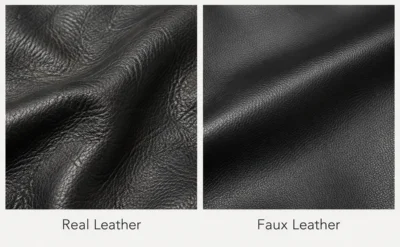
Faux Leather Sleeves
Faux leather provides a leather-like appearance without using animal hide.
Many synthetic alternatives use a polyurethane coating over a textile backing. Their flexibility, texture and aging characteristics vary according to construction.
Buyers should check the product specifications rather than assuming that a leather-like surface indicates genuine leather.
Read our real leather vs faux leather jacket comparison for a more detailed explanation.
Satin
Satin is a fabric weave known for its smooth and often lustrous surface. It describes the fabric structure rather than a specific fiber.
Varsity and baseball-style jackets can use polyester or nylon satin to create a visually different alternative to traditional wool construction.
Satin jackets often have a more pronounced athletic or vintage sportswear appearance, although their warmth and weight depend on the complete garment.
Cotton and Fleece
Cotton and fleece varsity jackets offer a more casual interpretation of the collegiate silhouette.
Depending on fabric construction, they can provide softer drape and a sweatshirt-like feel.
These materials are frequently suited to relaxed everyday outfits and transitional-weather layering.
Polyester and Nylon
Polyester and nylon can appear in jacket bodies, linings, fabric blends and decorative components.
Their characteristics vary widely according to weave, finish and fabric weight. Neither material automatically makes a jacket waterproof or suitable for severe weather.
Lining and Rib-Knit Materials
A jacket’s lining and knitted trims may use different fibers from its exterior.
Linings can influence how easily the garment slides over other clothing. Rib-knit trims may combine fibers with elastic components to improve flexibility and shape retention.
Checking these details individually provides a more complete understanding of the garment.
Varsity Jacket Material Comparison
| Material | Common placement | Typical characteristics | Buying consideration |
|---|---|---|---|
| Wool or Melton wool | Body | Dense, structured texture | Fiber content and fabric weight |
| Cowhide | Sleeves or body | Substantial leather feel | Thickness and flexibility |
| Lambskin | Sleeves or body | Often soft and supple | Finish and intended use |
| Faux leather | Sleeves or body | Leather-like surface | Coating quality and care |
| Satin | Body and sleeves | Smooth, lustrous appearance | Fiber content and lining |
| Cotton | Body | Casual textile appearance | Weight and structure |
| Fleece | Body | Soft, relaxed character | Layering and shape retention |
| Polyester or nylon | Shell or lining | Variable synthetic construction | Fabric finish and specifications |
Different Types of Varsity Jackets
Varsity jackets can be classified by material, fit, decoration and historical design influence.
These categories can overlap. For example, a jacket may be wool-bodied, oversized and vintage-inspired at the same time.
Traditional Wool and Leather Varsity Jacket
The traditional varsity jacket commonly combines a wool body, contrasting leather sleeves, snap buttons and rib-knit trims.
Decorative lettering and patches may reinforce its collegiate appearance.
This construction works particularly well with denim, sneakers, knitwear and heritage-inspired casual clothing.
All-Leather Varsity Jacket
All-leather varsity jackets use leather for the main body and sleeves while retaining varsity-inspired proportions and details.
They can feature matching leather panels or contrasting colors.
Compared with traditional wool-bodied designs, all-leather styles create a more uniform surface and a stronger connection to contemporary leather fashion.
Our complete leather jacket guide explains the broader characteristics of leather outerwear.
Wool Varsity Jacket
Wool varsity jackets use wool or wool-blend materials across most of the outer shell.
The sleeves may match the body or introduce contrasting textile colors.
These jackets preserve collegiate styling without relying on leather sleeves.
Satin Varsity and Baseball-Style Jackets
Satin varsity jackets use smooth, often glossy fabrics associated with vintage athletic clothing.
Their visual character can be influenced by baseball uniforms, team jackets and retro sportswear.
Some use striped trims and large chest graphics, while others feature understated designs.
Cotton and Fleece Varsity Jackets
These jackets combine varsity styling with softer casual fabrics.
They may resemble structured sweatshirts or lightweight athletic jackets and often work well in relaxed everyday outfits.
Classic Letterman Jacket
Classic letterman jackets emphasize institutional letters, patches and traditional athletic award styling.
Authentic school-issued versions can represent recognized achievements. Fashion-oriented letterman jackets imitate this design language without necessarily carrying the same institutional meaning.
Minimalist Varsity Jacket
Minimalist varsity jackets reduce prominent lettering, graphics and decorative patches.
Neutral colors and restrained detailing make them easier to coordinate with simple shirts, trousers and knitwear.
Oversized Varsity Jacket
Oversized varsity jackets use intentionally relaxed proportions.
Common features include a wider chest, increased sleeve volume and dropped shoulders where the design permits.
This silhouette provides additional layering space and is frequently associated with contemporary streetwear.
Cropped Varsity Jacket
Cropped varsity jackets shorten the body relative to conventional waist-length designs.
They can create a stronger visual relationship with high-rise jeans, trousers, skirts and layered tops.
Cropped construction is a design choice rather than a gender-specific requirement.
Vintage and Vintage-Inspired Varsity Jackets
A genuine vintage varsity jacket is an older original garment.
A vintage-inspired jacket is newly manufactured but incorporates historical design elements such as traditional colors, retro lettering, contrasting sleeves or period-inspired proportions.
The terms should not be treated as interchangeable when evaluating garment age and authenticity.
| Varsity jacket type | Classification | Distinguishing characteristic |
|---|---|---|
| Traditional wool and leather | Material | Wool body and contrasting leather sleeves |
| All-leather | Material | Leather body and sleeves |
| All-wool | Material | Wool-based outer shell |
| Satin | Material | Smooth, lustrous textile surface |
| Cotton or fleece | Material | Relaxed casual construction |
| Classic letterman | Cultural and decorative | Institutional-style lettering |
| Minimalist | Decoration | Reduced patches and graphics |
| Oversized | Silhouette | Deliberately increased volume |
| Cropped | Silhouette | Shortened body length |
| Vintage-inspired | Design heritage | Historical styling references |
What Do Varsity Jacket Letters and Patches Mean?
Letters and patches can represent athletic achievements, institutional identity or purely decorative fashion elements.
Their meaning depends on the garment’s origin and the organization or designer responsible for its decoration.
Traditional Varsity Letters
An earned varsity letter traditionally recognizes a student’s achievement or participation according to institutional requirements.
Although athletics are strongly associated with the practice, some schools also award letters for academic and extracurricular accomplishments.
Graduation Years, Names and Numbers
Letterman jackets may display a student’s graduation year, name, player number or school initials.
These details personalize the garment and can identify its connection to a particular institution or activity.
There is no universal decoration placement system used by every school.
Chenille, Embroidery and Appliqué
Chenille patches feature a raised pile that creates a textured appearance.
Embroidery uses stitched designs, while appliqué attaches shaped fabric pieces to the garment surface.
These techniques may be used individually or combined to create decorative lettering.
Decorative and Licensed Graphics
Contemporary varsity jackets frequently use fictional letters, graphic symbols, numbers and other collegiate-inspired decorations.
These do not necessarily represent an earned award.
Similarly, the appearance of a recognizable team or university emblem does not establish that a garment is officially licensed. Buyers seeking authentic institutional or team merchandise should verify the product’s authorization.
Varsity Jacket vs Letterman Jacket: What’s the Difference?
Varsity jackets and letterman jackets frequently refer to the same general outerwear style.
The primary historical distinction concerns purpose rather than mandatory construction.
A traditional letterman jacket is associated with earned institutional recognition. A modern varsity jacket can reproduce the same silhouette without representing a school award.
| Attribute | Varsity jacket | Traditional letterman jacket |
|---|---|---|
| Main association | Collegiate-inspired fashion | Institutional achievement |
| Materials | Traditional or contemporary | Often traditional combinations |
| Lettering | Optional or decorative | Frequently represents earned recognition |
| Intended wearer | General fashion consumers | Traditionally recognized students |
| Construction | Variable | Often classic varsity construction |
Many manufacturers use the terms interchangeably, so material composition alone cannot establish whether a jacket represents authentic institutional recognition.
Varsity Jacket vs Bomber Jacket vs Baseball Jacket
Varsity, bomber and baseball-style jackets share certain athletic proportions, but their design histories and typical features differ.
Varsity Jacket vs Bomber Jacket
Varsity jackets originate from collegiate athletic traditions, whereas bomber jackets developed from military aviation clothing.
Varsity designs frequently use contrast sleeves, snap buttons and decorative lettering. Bomber jackets commonly feature a zipper front and a more uniform outer shell.
Both may incorporate rib-knit cuffs and waistbands, and modern fashion jackets often combine their characteristics.
Explore our complete bomber jacket guide for a deeper explanation of bomber jacket history, construction and types.
Varsity Jacket vs Baseball Jacket
Baseball jackets are associated with athletic and team sportswear.
Satin bodies, team graphics and striped knitted trims are common design features, although wool and other materials may also be used.
The distinction between baseball and varsity jackets is less consistent across manufacturers because many baseball-style designs share traditional varsity construction.
| Feature | Varsity jacket | Bomber jacket | Baseball-style jacket |
|---|---|---|---|
| Heritage | Collegiate athletics | Military aviation | Baseball and team sportswear |
| Common closure | Snap buttons | Zipper | Snaps or zipper |
| Sleeve construction | Often contrasting | Often matching | Variable |
| Common materials | Wool, leather, textiles | Nylon, leather, other fabrics | Satin, wool, textiles |
| Decoration | Letters and patches | Often understated | Team graphics and lettering |
| Style identity | Collegiate and streetwear | Aviation and casual | Athletic and retro sportswear |
These are representative characteristics rather than fixed rules for every jacket.
How Should a Varsity Jacket Fit?
A varsity jacket should provide comfortable movement, sufficient chest space and sleeve proportions appropriate to its intended silhouette.
Traditional fits usually finish near the waist or upper hips, while contemporary designs may be cropped, longer or oversized.
Classic and Regular Fit
A regular varsity jacket should allow comfortable movement without excessive tension around the chest or fastening.
The shoulder seams generally follow the natural shoulder line, and the cuffs finish near the wrists.
There should be enough room for the clothing you intend to wear underneath.
Slim Fit
Slim-fit varsity jackets reduce excess body volume to create a more streamlined appearance.
They work well with lighter layers, but a closely fitted design may provide insufficient space for thick hoodies or sweaters.
Oversized Fit
An oversized varsity jacket should look intentionally relaxed rather than simply too large.
Dropped shoulders, wider sleeves and additional chest space can contribute to its proportions.
The cuffs and body length should still suit your preferences without interfering with comfortable movement.
Cropped Fit
Cropped varsity jackets emphasize a shorter body length.
Check where the hem finishes relative to your waist and how it works with your preferred trouser rise and layering pieces.
Five Signs of a Well-Fitting Varsity Jacket
- The shoulders suit the intended silhouette.
- The front closes without uncomfortable pulling.
- You can move your arms comfortably.
- The sleeve length is appropriate.
- The hem finishes at your preferred position.
When shopping online, compare the published garment measurements with a jacket you already own.
Chest circumference, shoulder width, sleeve length and back length are more useful than relying exclusively on a standard size label.
Popular Varsity Jacket Colors and Combinations
Color blocking is an important part of varsity jacket design.
The combination of body, sleeve and trim colors influences how prominently the jacket stands out and how easily it coordinates with other clothing.
| Color combination | Visual character | Suggested clothing |
|---|---|---|
| Black and white | Classic high contrast | Black jeans, white T-shirts, sneakers |
| Red and cream | Bold collegiate | Blue denim, neutral tops |
| Navy and white | Traditional and understated | Chinos, Oxford shirts |
| Green and cream | Heritage-inspired | Beige trousers, denim |
| Brown and tan | Warm and muted | Knitwear, earthy neutrals |
| Monochrome | Minimalist | Tonal outfits, simple trousers |
A jacket with bold lettering or multiple contrasting colors usually works best when the surrounding outfit is relatively simple.
Neutral or monochromatic designs offer greater flexibility for wardrobes built around restrained colors.
How to Style a Varsity Jacket
Varsity jackets work particularly well in casual outfits that balance athletic outerwear with complementary proportions, colors and textures.
Varsity Jacket Outfits for Men
Classic collegiate casual: Pair a traditional varsity jacket with a plain white T-shirt, straight-leg jeans and simple sneakers. The restrained base allows the jacket’s colors and construction to remain prominent.
Contemporary streetwear: Wear a relaxed varsity jacket over a hoodie with loose trousers or cargo pants. Choose a jacket with enough chest and sleeve space to accommodate the additional layer.
Smart-casual styling: Combine a minimalist varsity jacket with fine knitwear, chinos and understated shoes. Solid colors and reduced graphics create a more restrained appearance.
Heritage-inspired styling: Pair a wool-and-leather varsity jacket with blue denim, textured knitwear and casual leather boots. The combination emphasizes traditional materials and American sportswear influences.
Explore different designs in our men’s varsity jacket collection.
Varsity Jacket Outfits for Women
Everyday casual: Wear a regular-fit varsity jacket with a simple top, straight-leg jeans and sneakers. This combination works across different jacket materials and color schemes.
Cropped varsity styling: Pair a cropped jacket with high-rise trousers or jeans to emphasize the shorter body proportions.
Oversized streetwear: Combine a relaxed varsity jacket with a simple fitted or loosely structured top, wide-leg trousers and sneakers. Keep decorative details balanced throughout the outfit.
Dress and skirt combinations: Layer a varsity jacket over a casual dress or combine it with a skirt and boots. The contrast between athletic outerwear and different garment shapes creates a distinct outfit.
Discover more silhouettes in our women’s varsity jacket collection.
How to Balance Varsity Jacket Proportions
An oversized jacket introduces volume to the upper body. Straight-leg or relaxed trousers can complement this shape, while slimmer trousers create a stronger contrast.
Cropped jackets work well with higher-rise garments because the proportions emphasize the waist.
When wearing heavily patched designs, simplify the remaining clothing to avoid competing graphics and colors.
Can You Wear a Varsity Jacket in a Smart-Casual Outfit?
Yes, a minimalist varsity jacket can work in some informal smart-casual settings.
Choose restrained colors, limited decoration and a suitable fit. Pair the jacket with chinos, fine knitwear or a casual collared shirt.
Traditional heavily decorated letterman jackets are generally better suited to casual environments than formal occasions.
Are Varsity Jackets Warm?
A varsity jacket’s warmth depends on its shell materials, lining, insulation, construction and fit.
Traditional wool-bodied jackets can provide useful warmth, particularly when combined with suitable lining and layering. Lightweight satin or cotton designs may be better suited to milder conditions.
Spring and Fall
Varsity jackets are often suitable for transitional weather because their short construction works with T-shirts, shirts and light knitwear.
Choose the shell weight and lining according to local weather conditions.
Winter
A substantial wool-and-leather varsity jacket with appropriate insulation may work well during cooler winter weather.
However, a standard fashion varsity jacket should not automatically be considered suitable for freezing temperatures or severe winter conditions.
Mild Weather
Lightweight satin, cotton and synthetic designs can provide a less bulky outer layer.
Check the complete construction because some satin jackets also contain substantial insulation.
Rainy Conditions
Varsity jackets are not inherently waterproof.
Wool, leather and synthetic fabrics respond differently to moisture, and water resistance depends on the garment’s finish and construction.
Avoid prolonged rain exposure unless the manufacturer confirms that the jacket is designed for those conditions.
What to Look for When Buying a Varsity Jacket
Choosing a varsity jacket involves more than selecting a color or decorative design.
The material combination, fit, construction and intended use determine whether the garment suits your needs.
Choose the Right Material Combination
Check the body, sleeves, lining and rib-knit composition individually.
Choose wool-and-leather construction for a traditional appearance, satin for a smoother athletic style, or a minimalist contemporary design for greater wardrobe flexibility.
Evaluate Fit and Measurements
Compare garment measurements with your preferred jacket and consider whether you will wear thick layers underneath.
Avoid assuming that identical size labels produce the same fit across different manufacturers.
Inspect Stitching and Construction
Look for consistent stitching, properly aligned panels, securely attached ribbing and neatly finished pockets.
Clear product photography can reveal visible construction details, although it cannot establish every aspect of material quality or durability.
Choose Your Decoration Level
A heavily patched jacket creates a stronger collegiate or streetwear identity.
A minimally decorated jacket can be easier to incorporate into everyday outfits.
Check whether letters and graphics are decorative, personalized, institution-issued or officially licensed.
Consider Overall Value
Compare jackets according to disclosed materials, construction, fit, expected frequency of wear and purchasing conditions.
A higher price does not automatically establish superior quality, just as a lower price does not necessarily indicate an unsuitable garment.
Varsity Jacket Buying Checklist
- Verify body and sleeve materials separately.
- Check lining and insulation details.
- Review the garment size chart.
- Consider your preferred layering pieces.
- Inspect visible stitching and hardware.
- Choose colors that complement your wardrobe.
- Confirm customization or licensing claims where relevant.
- Read care instructions.
- Review shipping, exchange and return conditions.
How to Care for a Varsity Jacket
Varsity jacket care depends on the combination of materials used throughout the garment.
The appropriate cleaning method for a cotton jacket may be unsuitable for a traditional wool-and-leather letterman jacket.
Caring for Wool and Leather Varsity Jackets
Always follow the care label for the complete garment.
Avoid machine washing mixed wool-and-leather jackets unless the manufacturer specifically permits it.
Use a supportive hanger, store the garment in a dry and ventilated environment, and seek professional cleaning when the combination of materials requires specialist treatment.
Caring for All-Leather Varsity Jackets
Use maintenance methods appropriate to the leather type and finish.
Avoid unnecessary soaking, aggressive cleaning products and direct heat.
Our leather jacket care guide covers cleaning, conditioning and storage in greater detail.
Caring for Satin, Cotton and Synthetic Jackets
Cleaning requirements depend on fiber composition, lining and decorative details.
Some jackets may permit gentle washing, while others require professional cleaning. The garment label should determine the appropriate method.
Protecting Patches and Rib-Knit Trims
Avoid pulling, aggressively brushing or applying unsuitable heat directly to chenille patches and embroidery.
Store the jacket without compressing raised decorations for prolonged periods. Handle knitted trims carefully to help preserve their shape.
Find the Right Varsity Jacket for Your Style
The right varsity jacket depends on how its materials, silhouette, colors and decorative details complement your wardrobe.
Traditional wool-and-leather construction provides a recognizable collegiate appearance, while satin, minimalist and contemporary leather interpretations offer different ways to wear the style.
Consider your preferred fit, layering requirements, material composition and expected use before choosing a jacket.
Explore the Remark Jackets men’s varsity jacket collection or browse our women’s varsity jacket styles to find a design suited to your preferences.
Frequently Asked Questions About Varsity Jackets
Contrasting leather sleeves are a traditional design feature that creates visual and textural separation from the wool body. Leather also contributes a different surface structure and feel. However, modern varsity jackets may use textile or synthetic sleeves instead.
Yes. Contemporary varsity jackets are available as general fashion garments and do not require participation in collegiate athletics. Authentic earned letters may carry specific institutional significance, which differs from purely decorative varsity-inspired graphics.
Not necessarily. Traditional varsity jackets often have a moderately relaxed silhouette, but regular, slim, cropped and intentionally oversized versions are also available. The appropriate fit depends on the design, layering requirements and personal preference.
No. Although wool is strongly associated with traditional varsity jackets, modern designs can use leather, satin, cotton, fleece, polyester, nylon and other materials. Always check the individual body and sleeve specifications.
Varsity jackets remain an established category within collegiate-inspired clothing, heritage fashion, casualwear and streetwear. Contemporary interpretations include minimalist leather designs, cropped jackets, relaxed silhouettes and traditional color-block combinations.