
Blog
The Complete Leather Jacket Guide: Types, Leather, Fit & How to Choose

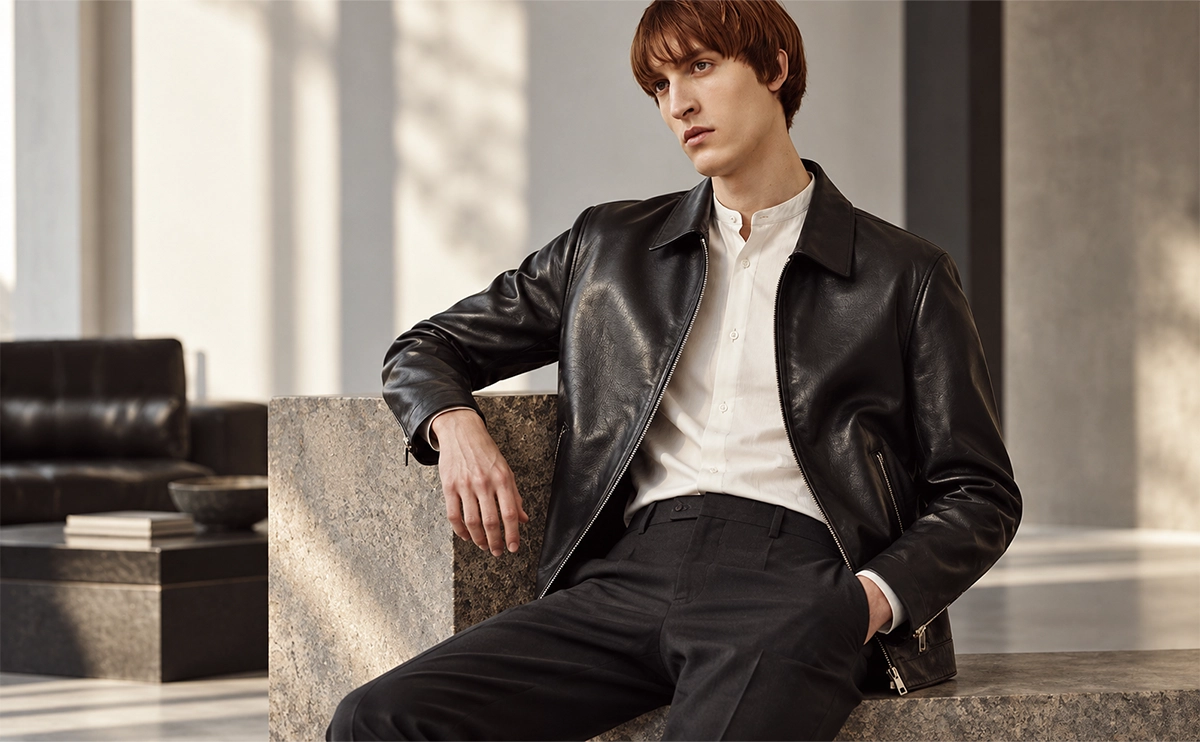
A good leather jacket is the result of several decisions made together: the type of leather, how that leather was processed, how the jacket is built, which style it follows, how it fits, and what you actually need it to do. Two jackets that look similar in a photo can feel and wear very differently.
This guide walks through each of those decisions in order. You will learn how cowhide, lambskin, sheepskin and goatskin differ, what terms like full-grain, top-grain and genuine leather really mean, how biker, cafe racer, bomber and aviator jackets differ, how a jacket should fit, and how to inspect construction before you commit. If you already know what you want, use the headings to jump ahead. If this is your first leather jacket, reading in order will save you from the most common mistakes.
What Is a Leather Jacket?
A leather jacket is an outer garment made mainly from animal hide that has been tanned to make it durable and resistant to rot. Jackets vary widely depending on the hide, finish, thickness, lining and construction, so two leather jackets can feel and perform very differently.
Tanning is the process that converts raw hide into stable, usable leather. After tanning, the leather is dyed, finished and cut into panels that are sewn into a jacket. Each of those steps affects how the final garment looks, feels and ages.
Several variables separate one leather jacket from another:
- The hide or material: cowhide, lambskin, sheepskin, goatskin, or an alternative such as polyurethane (PU) faux leather
- Tanning and finishing: how the surface is dyed, coated or left natural
- Thickness: which affects weight, structure and break-in time
- Construction: panel layout, seams, reinforcement, hardware
- Lining: which affects comfort, warmth and ease of wear
- Style and purpose: a fashion jacket, a heritage-inspired jacket and a certified riding jacket are different products
Faux leather jackets are made from synthetic coatings on a fabric base, so they are not leather in the traditional sense. They are covered in detail below. Unless stated otherwise, this guide refers to real leather.
Why Are Leather Jackets So Popular?
Leather jackets have lasted as a category because they do several practical things at once. Performance varies by leather and construction, but the common reasons shoppers choose them are:
- Durability: Leather is a dense, fibrous material. A well-made jacket often resists everyday scuffs and wear better than many fabric outerwear options, although quality varies widely.
- Wind resistance: Leather blocks wind effectively, which is why it became associated with aviation and motorcycling.
- Versatility: Leather works with denim, chinos, knitwear and tailored trousers. A single jacket can move between casual and slightly smarter outfits.
- Character over time: Many leathers develop creases, softening and surface changes with use. Some buyers value this as a record of wear, while others prefer a cleaner look and choose more heavily finished leather.
- Range of silhouettes: From short bombers to structured biker jackets to tailored blazers, leather is available in nearly every outerwear shape.
The tradeoffs are real too. Leather is heavier than many synthetic jackets, needs some care, is not fully waterproof, and costs more than most fabric alternatives. Knowing what you want from the jacket helps you decide whether those tradeoffs are worth it.
Types Of Leather Used In Jackets
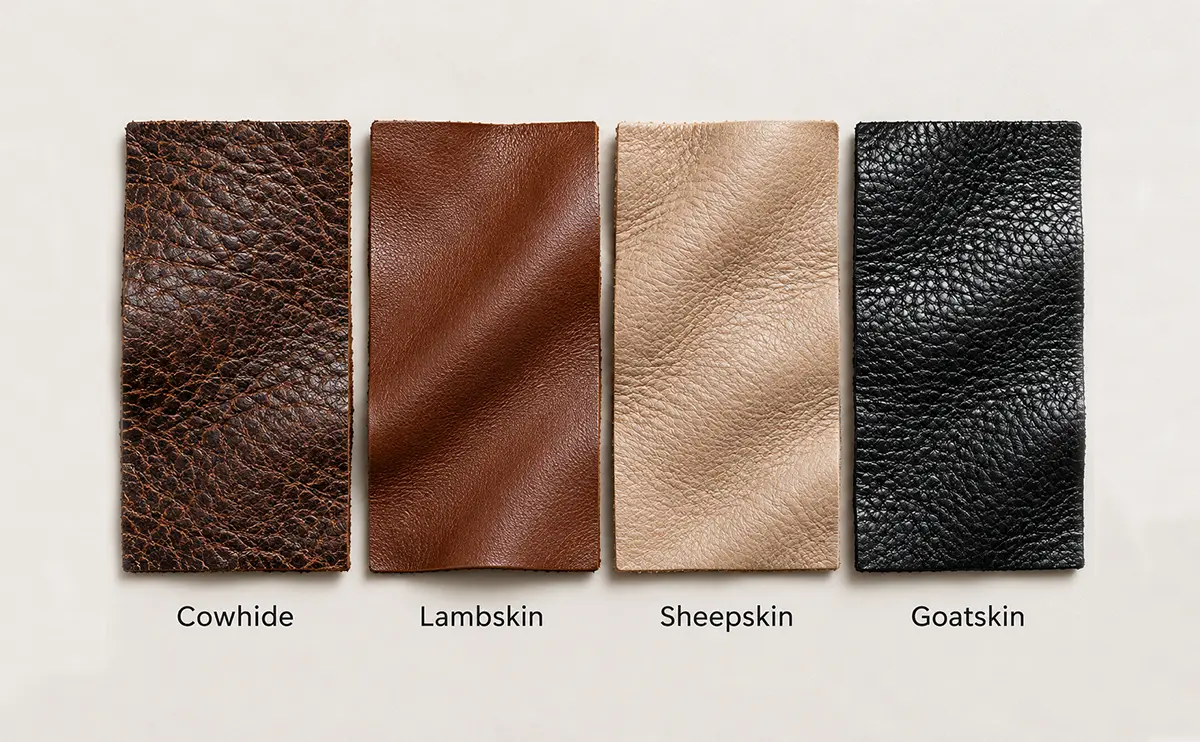
The phrase “leather type” can mean two different things, and shoppers often mix them up:
- The animal hide used: cowhide, lambskin, sheepskin, goatskin and others. This affects the natural grain pattern, softness, weight and strength.
- How the surface of the hide is processed: full-grain, top-grain, corrected-grain and so on. This affects how natural the surface looks and how it ages.
A jacket can be described using both, for example “full-grain cowhide” or “top-grain lambskin”. This section covers hides first. Grades are covered afterward.
One caution applies to everything below. Hide type gives you general tendencies, not guarantees. The age of the animal, the part of the hide, the tanning method, the thickness the maker chooses and the garment’s construction all influence the result. A soft, thin cowhide jacket and a heavy, stiff cowhide jacket can both exist.
Cowhide Leather
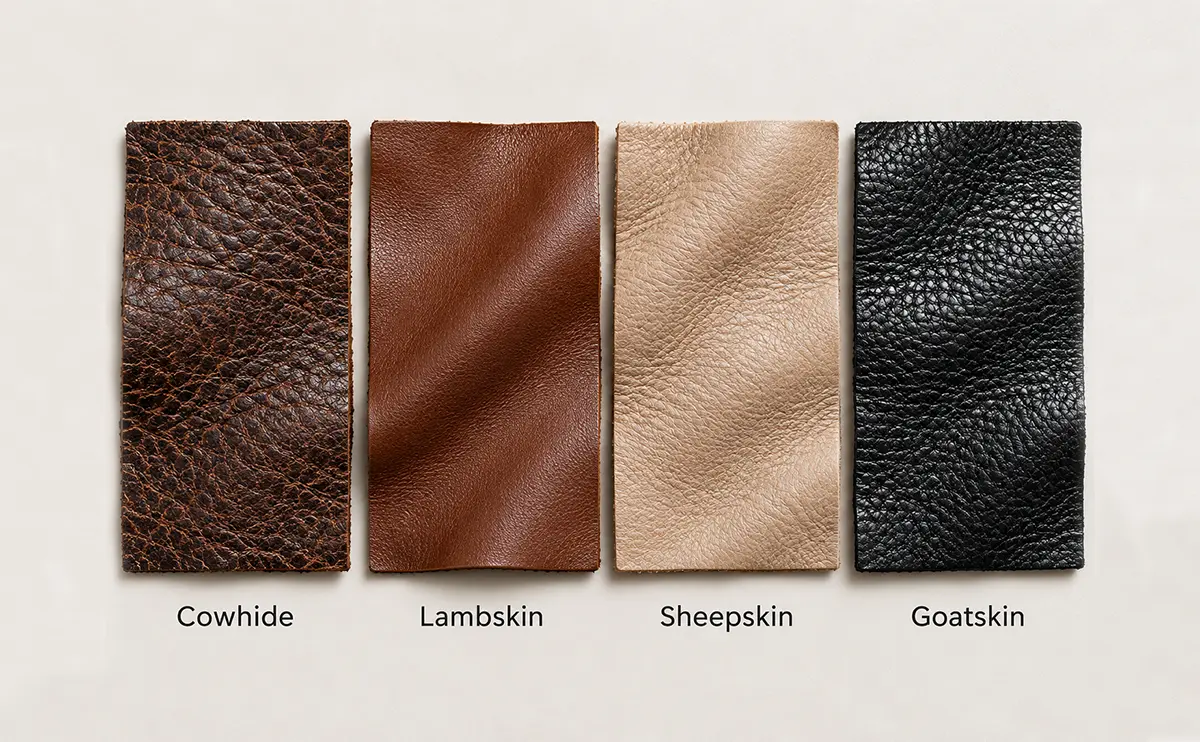
Cowhide is one of the most widely used leathers for jackets. It is often chosen for its strength and structure, and it tends to suit biker and motorcycle-inspired styles. Depending on thickness and tanning, it can range from fairly supple to quite stiff.
Cowhide fibers are typically dense and the hide is large, which gives makers a lot of usable material. In many jackets, cowhide has a firmer hand than lambskin and offers greater resistance to everyday abrasion. That is why it is common in structured biker jackets, rugged outerwear and heavier-duty designs.
What this means for the buyer:
- Feel and weight: Many cowhide jackets feel more substantial, but not all are heavy. Thinner, softer cowhide is used for lighter jackets.
- Break-in: Thicker cowhide often needs more wear before it softens and shapes to your body. If you want a jacket that feels broken in on day one, ask about thickness and finish.
- Best suited to: Wearers who want structure, a more rugged look, or a jacket for frequent use.
Lambskin Leather
Lambskin is known for a soft, smooth, supple feel and a refined surface. It is generally lighter and more flexible than heavier hides, which makes it popular for fashion-oriented and tailored leather jackets, though it usually trades some toughness for comfort.
Lambskin comes from young sheep. The fibers are fine, which usually gives a smooth surface and a flexible drape. Because it is often cut thinner, lambskin jackets tend to feel lighter and more comfortable straight away.
The tradeoff is durability. In general, lambskin is less resistant to heavy abrasion and snagging than a thick cowhide, and it can mark more easily. Careful wear and storage matter more.
Lambskin is common in:
- fashion jackets and slim-cut styles
- bomber jackets
- cafe racer jackets
- tailored jackets and leather blazers
It tends to suit wearers who prioritize comfort, a close or refined fit, and a lighter jacket for everyday casual or smart-casual use.
Sheepskin Leather
Sheepskin comes from adult sheep rather than lambs, so it is closely related to lambskin. In practice, sheepskin leather is often a little thicker and sturdier than lambskin, while still being softer than many cowhides. Naming varies between makers, so the label alone does not tell you everything. Ask about the actual feel and thickness.
The word that causes the most confusion here is shearling. These two terms are not the same thing:
- Sheepskin leather describes the hide used to make the leather.
- Shearling describes a construction in which the sheepskin is tanned with the wool left on. The leather side faces outward and the wool faces inward, providing insulation.
So a shearling jacket is made from sheepskin, but not every sheepskin jacket is a shearling jacket. Shearling styles are covered further below in the jacket-types section. If you are shopping for cold weather, [Internal Link: Shearling Jackets] are the group to look at.
Goatskin Leather
Goatskin has a distinctive, often pebbled grain and is valued for being flexible while still being fairly strong for its thickness. In many jackets it sits between lambskin and heavier cowhide: more supple than a thick cowhide, but often more resilient than very soft lambskin.
Goatskin has a long association with flight jackets. The U.S. Army Air Forces A-2 flight jacket specification allowed horsehide or goatskin, and goatskin remains a common choice for heritage-style flight jackets. That association is part of why goatskin is often used for classic aviator-style designs today.
For buyers, goatskin is worth a look if you want a balance of flexibility and durability and like a more textured surface. Its grain is often visibly pebbled, which can help hide small marks.
Full-Grain vs Top-Grain vs Other Leather Grades
Leather terminology is one of the most misunderstood parts of shopping. Marketing language is inconsistent, and some terms are used loosely. The explanations below describe how the terms are generally understood in the industry. Treat them as a starting point and read each product’s description carefully.
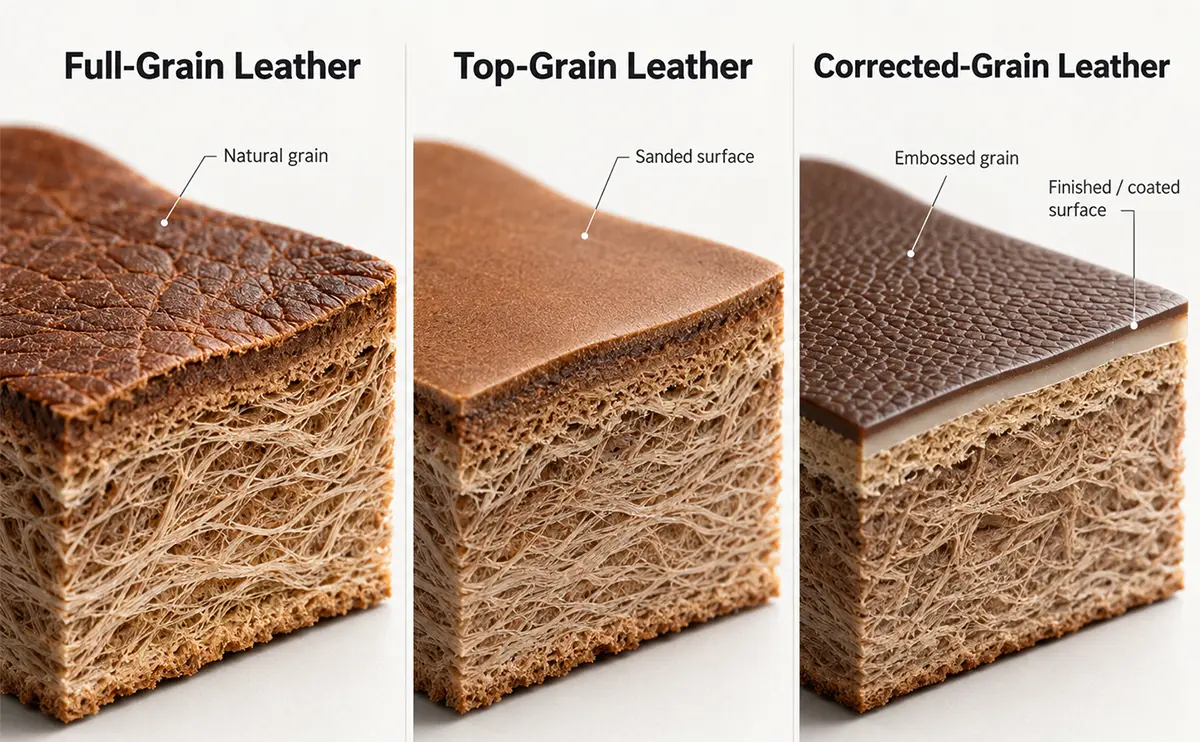
A hide has a natural top surface called the grain. This is the outermost layer, with the tightest fiber structure. How much of that natural surface is kept, sanded away or replaced is what these grades describe.
| Full-Grain | Top-Grain | Corrected-Grain | |
|---|---|---|---|
| Surface treatment | Natural surface kept, not sanded to remove marks | Surface lightly sanded or buffed, then finished | Heavily sanded, then coated and often embossed with an artificial grain pattern |
| Natural marks | Usually visible | Reduced | Largely hidden |
| Typical look | Natural, varied | Smoother, more uniform | Very uniform |
| Aging | Often develops visible character | Ages more gently, depending on finish | Surface is mostly coating, so ages differently |
| Consistency | Varies from hide to hide | More consistent | Most consistent |
| Common in | Heritage, rugged and premium jackets | Many quality fashion jackets | Lower-cost or highly uniform finishes |
Full-Grain Leather
Full-grain leather keeps the natural surface of the hide. Because the surface is not sanded down to remove imperfections, it usually shows natural variation, including grain patterns and small marks. It tends to age visibly and can develop a patina with wear.
This is often seen as a mark of quality, but it does not automatically mean “the best jacket for everyone”. Full-grain leather can be firmer, can show scars and variations that some buyers dislike, and depends heavily on the quality of the original hide and the tanning. A well-made top-grain jacket can be a better choice than a poorly made full-grain one, particularly if you want a smooth, uniform appearance.
Top-Grain Leather
Top-grain leather has had the very top of the surface lightly sanded or buffed to reduce imperfections, and is then usually finished with a coating or dye. The result is a more uniform, smoother surface, often with a softer feel from the start.
Many high-quality garments use top-grain leather because it gives makers a more consistent material to work with, which suits fashion jackets and slimmer cuts. The tradeoff is that some of the natural surface character is reduced, and the finish plays a larger role in how the leather ages.
Corrected-Grain Leather
Corrected-grain leather has been sanded more heavily to remove natural marks, then coated and often embossed with a uniform grain pattern. It allows makers to use hides with more visible imperfections and produce a very even look.
It is not automatically poor quality, and it has practical benefits such as consistency and stain resistance. The tradeoff is that the surface is largely a finish, which can feel less natural, age differently and be less breathable.
Genuine Leather
“Genuine leather” is often described online as a low-grade tier. That oversimplifies it. The phrase primarily indicates that the material is real leather rather than a synthetic. It does not, on its own, tell you about the grade, the hide, the thickness or the quality of construction.
In practice, some products labeled “genuine leather” are of modest quality, and some are perfectly good. A jacket’s quality depends on the hide, how it was processed, how it was finished and how it was made. So treat “genuine leather” as confirmation of material, not as a quality ranking. If a seller does not specify more detail, such as the hide type or grain, it is reasonable to ask.
It is also different from bonded leather, which is made from leather fibers bound together with an adhesive and is not typically used for jackets, and from split leather, which comes from the lower layers of a hide after the top has been separated. Split leather is commonly used for suede and in some lower-cost products, and it generally lacks the strength and finish of grain leather.
Faux Leather
Faux leather is a synthetic material designed to look like leather. Most commonly it is polyurethane (PU) or PVC coated onto a fabric backing. Some newer products use plant-based or recycled components, but the finished surface is usually still a coated textile.
Buyers choose faux leather for lower cost, consistent appearance, lighter weight and because they prefer a non-animal material. The tradeoffs:
- Feel and breathability: Faux leather generally breathes less than real leather, which can feel warmer or clammier.
- Aging: Real leather tends to soften and develop character. Faux leather’s coating can crack, peel or wear unevenly over time, depending on quality and use.
- Durability: Quality varies a lot. A well-made faux jacket can be a sensible choice for occasional wear, but it is generally not expected to age the same way as real leather.
- Care: Usually simpler to wipe clean but cannot be conditioned the way real leather can.
Neither option is “better” in every case. The right choice depends on budget, values, climate and how long you expect to keep the jacket. A dedicated comparison is planned here: .
Which Leather Is Best for a Jacket?
There is no single best leather for every jacket. Cowhide is often chosen for toughness and structure, lambskin for softness and light weight, goatskin for a balance of flexibility and strength, and sheepskin or shearling for warmth. The best choice depends on how you will wear the jacket.
The table below summarizes general tendencies. Real jackets vary with thickness, tanning and construction, so use it as a guide, not a rule.
| Leather | Typical feel | Relative durability | Relative weight | Common jacket styles | Best suited for |
|---|---|---|---|---|---|
| Cowhide | Firmer, more structured; can be soft if thinner | Often high | Often heavier, depending on thickness | Biker, motorcycle-inspired, rugged jackets | Structure, frequent wear, a rugged look |
| Lambskin | Soft, smooth, supple | Moderate; less resistant to heavy abrasion | Often lighter | Cafe racer, bomber, blazers, fashion jackets | Comfort, a refined fit, everyday smart-casual wear |
| Sheepskin | Soft to medium; shearling has wool inside | Moderate to good | Medium; shearling is bulkier | Shearling, aviator, B-3 style | Cold weather, warmth |
| Goatskin | Flexible with a pebbled grain | Often good for its thickness | Medium | Flight jackets, bombers, casual jackets | A balance of flexibility and durability |
For a rugged jacket
If you want a jacket that feels sturdy and is meant for frequent, hard wear, cowhide is a logical starting point. It is often used in biker styles because the firm hand holds the jacket’s shape. Expect a longer break-in with thicker versions.
For a softer everyday jacket
If comfort straight away matters more than maximum toughness, lambskin is often the more comfortable choice. It drapes well and is easy to layer, which suits slimmer styles and smart-casual outfits. Treat it with a little more care around rough surfaces and heavy bags.
For cold-weather outerwear
For genuinely cold weather, shearling is the most practical leather option because the wool provides insulation that an unlined leather jacket cannot. For milder cold, a well-lined leather jacket with room for a sweater may be enough. See if warmth is your priority.
For a balance of flexibility and durability
Goatskin is worth considering if you want something less stiff than heavy cowhide but sturdier than very soft lambskin. The textured grain is often a visual feature in its own right.
Different Types of Leather Jackets
Jacket style is separate from leather type. A biker jacket can be made in cowhide or lambskin, and a bomber can be leather, suede or fabric. Style describes the design: the collar, closure, length, hardware and overall silhouette. The sections below cover the main styles shoppers compare. Browse the full range at , or start with or. A fuller breakdown is planned in .
Biker Jackets
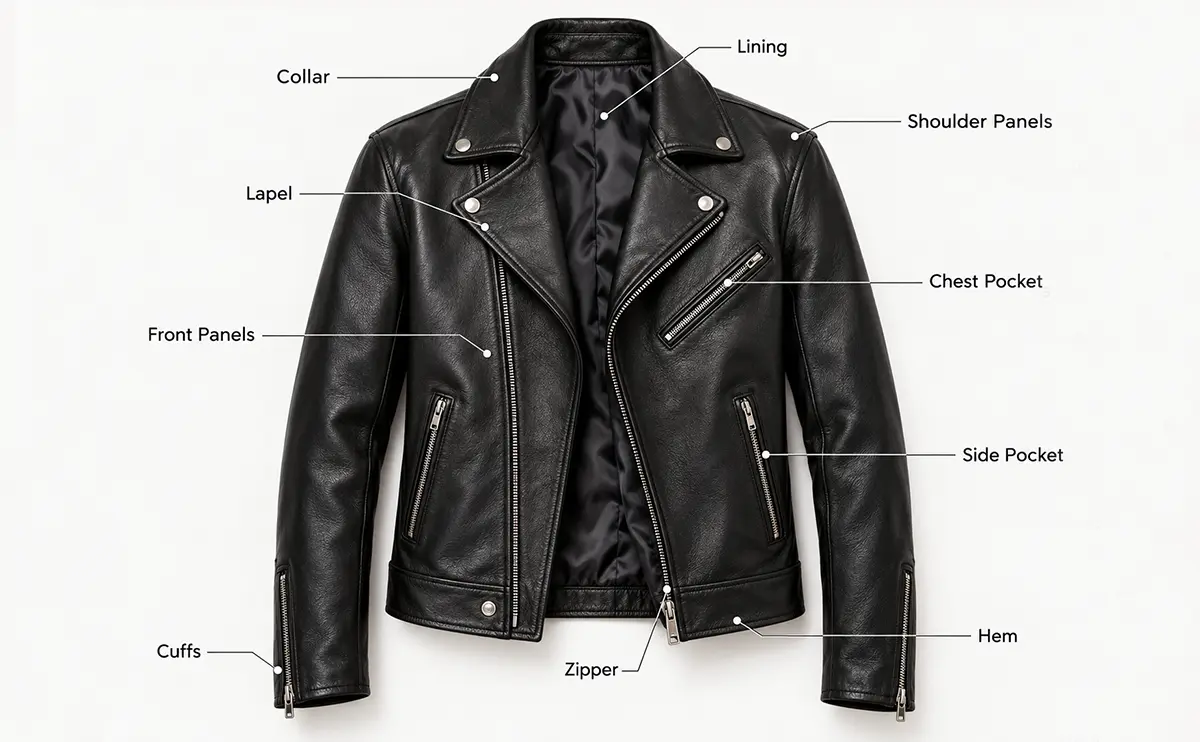
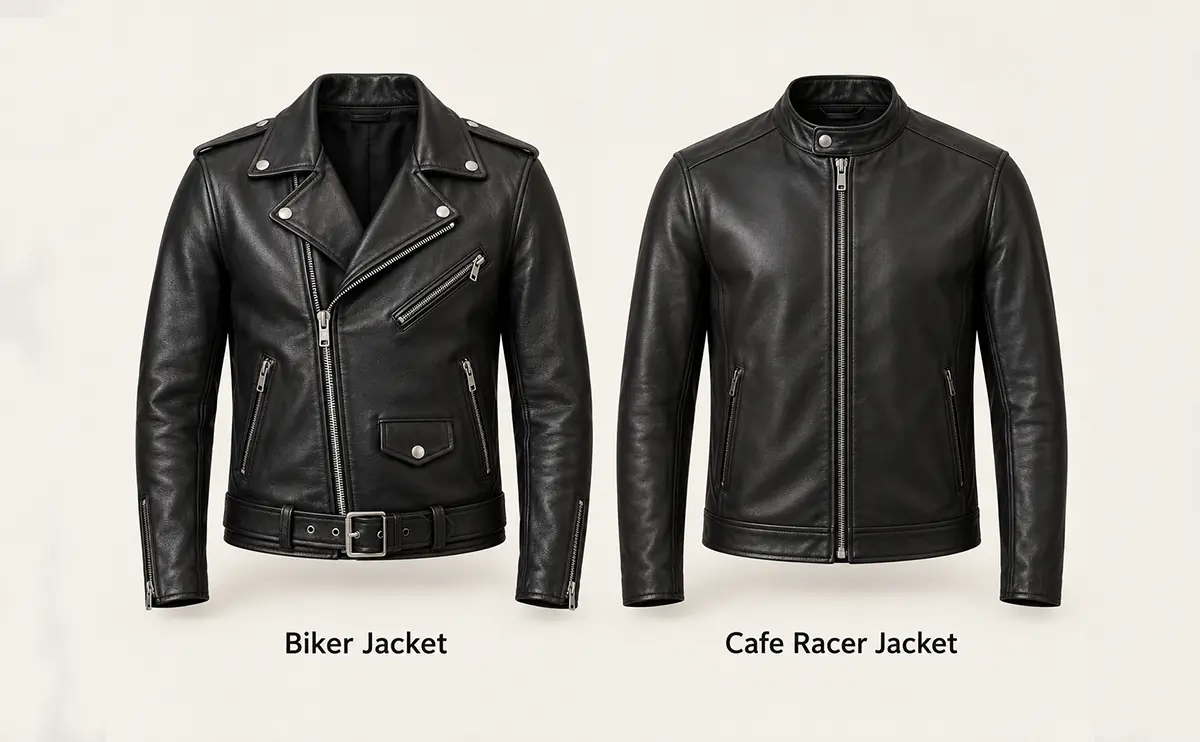
The biker jacket is the style most people picture first. Its heritage comes from motorcycle riding, and its recognizable features include:
- an asymmetrical front zipper on many classic designs (often called a perfecto or double rider style)
- wide lapels that can snap down
- metal hardware, such as zippers, snaps and belt details
- a structured, sometimes boxy silhouette
The double rider is the classic version of the asymmetrical-zip design. Variations exist, including versions with a belt, with a straight zipper, or with a collar instead of lapels.
One important distinction: many biker jackets sold for fashion are not protective riding gear. Motorcycle protective clothing is typically tested to standards such as EN 17092 in Europe and usually includes impact armor and specific seam and abrasion requirements. A fashion biker jacket may borrow the look without meeting any protective standard. If you ride, check for a stated certification rather than assuming a leather jacket protects you.
Shoppers looking for classic asymmetrical styling can browse .
Cafe Racer Jackets
The cafe racer is a leaner, more minimal take on the motorcycle-inspired jacket. Typical features are:
- a streamlined, close silhouette
- a straight center zipper rather than an asymmetrical one
- a small band collar or snap-tab collar, with no wide lapels
- minimal hardware and a clean surface
Compared with a traditional biker jacket, the cafe racer has fewer visual elements, so it reads as simpler and often smarter. It is a common first leather jacket because it is easy to style and the plain look works with most wardrobes. If you prefer the clean, minimal construction described here, explore our. A direct comparison is planned in .
Bomber Jackets
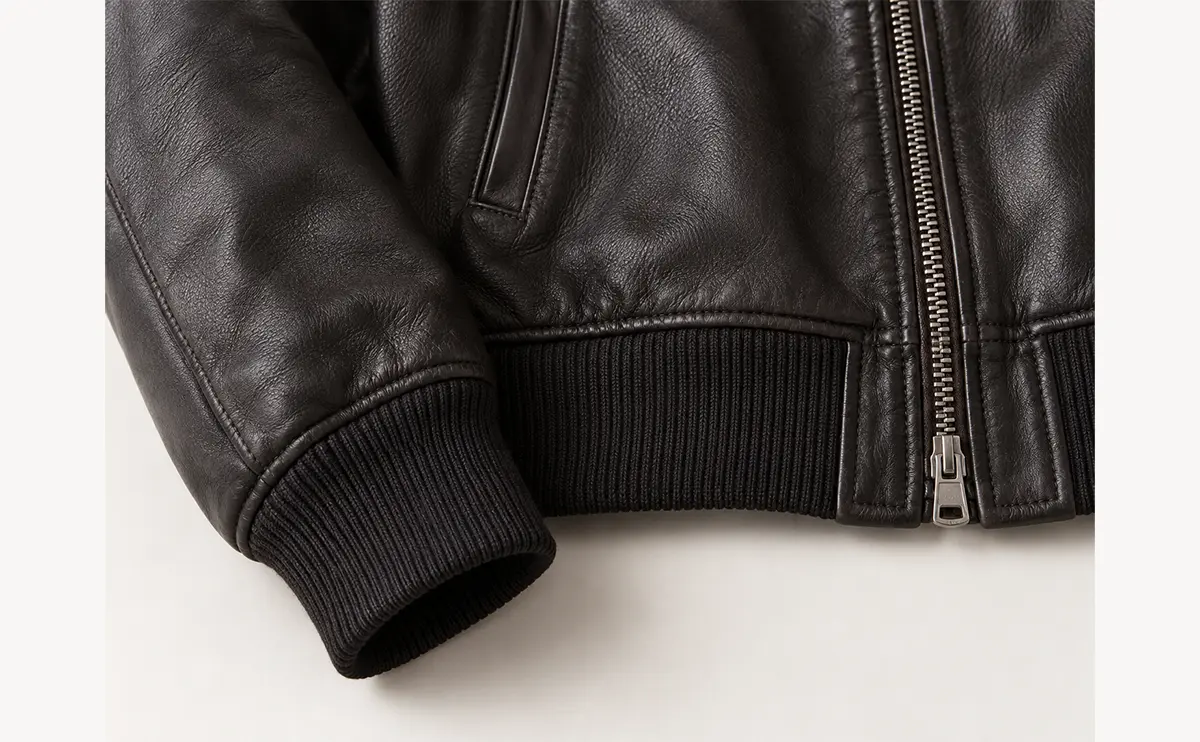
The bomber is a shorter, more casual jacket. Typical features are:
- a short length ending at or around the waist
- ribbed knit cuffs and hem on traditional designs, which give it a blouson shape
- a simple front zipper
- a relaxed, casual feel
Bombers have an aviation heritage and are made in many materials. Leather bombers range from sleek, soft lambskin to heavier, more heritage-inspired versions. The shorter shape pairs easily with jeans and casual outfits. See .
Aviator Jackets
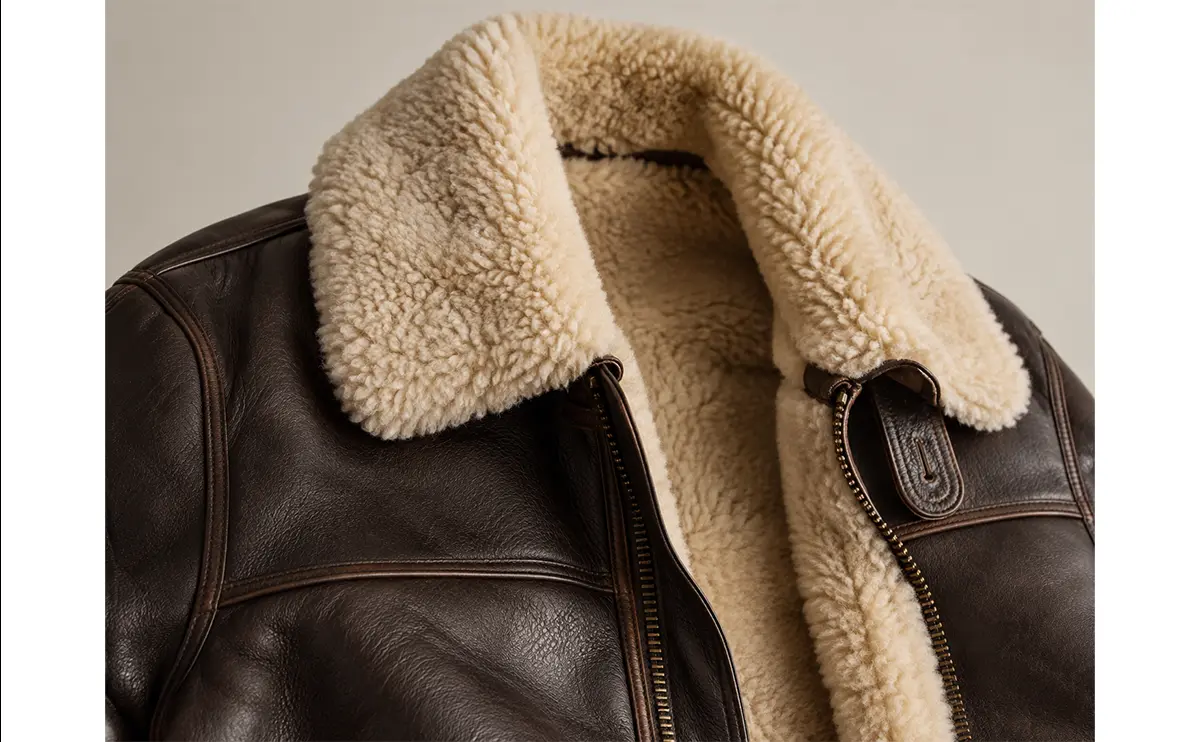
Aviator jackets take their cues from military flying gear. In current fashion the term often points to jackets with a shearling collar or lining, a sturdy leather exterior and a practical, warm look. They tend to be bulkier than a standard leather jacket and are chosen with colder weather in mind. Browse for this look.
Flight Jackets
“Flight jacket” is a broader term that covers several military-derived designs. It overlaps with bomber and aviator, but the terms are not completely interchangeable. Two reference points are useful:
- A-2: a classic leather flight jacket first associated with the U.S. Army Air Forces, with a shirt-style collar, front zipper, flap pockets and knit cuffs and waistband.
- B-3: a heavy shearling jacket designed for very cold, high-altitude conditions.
So a bomber or A-2 style is typically a leather jacket without shearling, while a B-3 style is a shearling jacket. If a listing says “flight jacket”, check the photos and description to see which kind it actually is.
Leather Blazers
A leather blazer follows a tailored jacket pattern, with lapels, structured shoulders and often a button front. It is generally made in thinner, softer leather, commonly lambskin, so it drapes well.
It suits smarter outfits, such as over a shirt, with tailored trousers, or in place of a fabric blazer for a more relaxed office or evening look. Compared with a casual leather jacket, it has a more formal shape and less hardware.
Shearling Leather Jackets
A shearling jacket uses sheepskin with the wool left on, with the leather on the outside and wool on the inside. It is the warmest of the leather jacket types, because the wool traps air. The tradeoffs are weight and bulk, and the jacket is generally best for genuinely cold conditions rather than mild days. Explore if cold weather is the priority.
Biker vs Cafe Racer vs Bomber: Which Style Should You Choose?
| Style | Overall look | Collar | Front closure | Fit | Best for |
|---|---|---|---|---|---|
| Biker | Structured, bold, heritage-inspired | Wide lapels, often snap-down | Often an asymmetrical zip | Structured, sometimes boxy | A strong statement and a classic look |
| Cafe racer | Clean, minimal, streamlined | Small band or snap-tab collar | Straight center zip | Closer, slimmer | A simple, versatile everyday jacket |
| Bomber | Casual, relaxed, sporty | Ribbed knit or small collar | Straight zip | Shorter, often a looser blouson shape | Casual outfits with jeans and tees |
| Aviator | Warm, rugged, military-inspired | Often a shearling collar | Zip or buttons | Roomier, bulkier | Cold weather |
How to decide:
- Choose a biker if you like visible detail and a more dramatic, traditional look, and you are comfortable with a structured shape.
- Choose a cafe racer if you want the simplest, easiest-to-style option, or this is your first leather jacket.
- Choose a bomber if you prefer a short, casual, relaxed shape for everyday wear.
- Choose an aviator or shearling style if cold-weather warmth is the main requirement.
If you are still undecided, a cafe racer in a black or brown is a safe starting point because it works with most outfits.
How Should a Leather Jacket Fit?
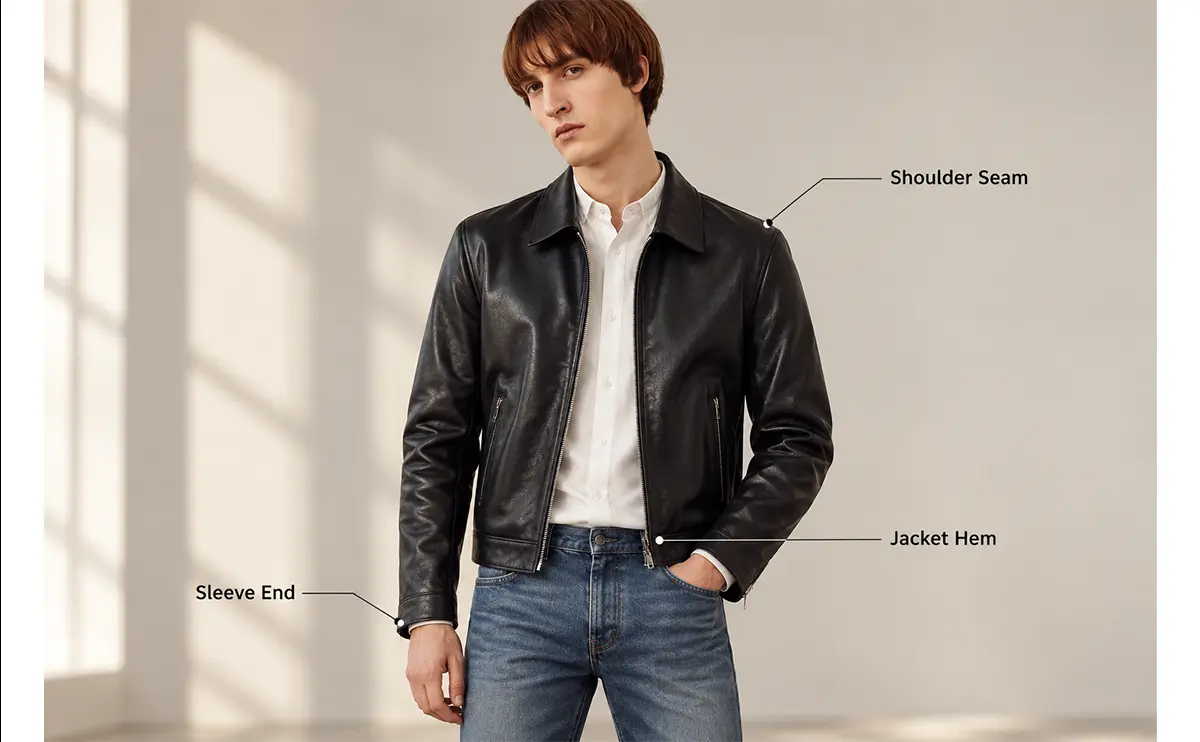
A leather jacket should sit flat across the shoulders, feel snug but not restrictive across the chest, allow you to raise and cross your arms comfortably, and leave room for the layers you plan to wear. Fit varies by style, so a bomber, biker and blazer will each sit a little differently.
Fit matters more with leather than with most fabrics, because leather does not stretch or give the way knit or woven cloth does. It softens and shapes slightly with wear, but it will not become a different size. Check each area below. A detailed standalone guide is planned in .
Shoulders
The shoulder seam should sit at or very near the edge of your shoulder bone. If the seam hangs down your upper arm, the jacket is too big. If it sits up on top of your shoulder or pulls toward your neck, it is too small.
Shoulders are the hardest area to alter, so they are the most important place to get right.
Chest
The jacket should feel fitted but not tight. You should be able to zip or button it without strain or pulling across the chest. Visible horizontal creasing across the zipper line usually means the jacket is too tight. A noticeably loose, boxy chest usually means it is too large, although some relaxed styles are cut that way on purpose.
Sleeves
With your arms relaxed at your sides, sleeves typically end around the wrist bone or a little past it. When you reach forward, the sleeves will ride up slightly, and that is normal. Some styles, such as bombers with knit cuffs, sit differently, because the cuff is designed to fit at the wrist. Biker jackets often have a slightly longer sleeve that bunches a little at the wrist by design.
Jacket Length
Length depends on the style:
- Biker: typically ends around the waistband or slightly below.
- Cafe racer: usually ends at about the waist or hip, kept short and clean.
- Bomber: usually ends at or just above the waistband, with a ribbed hem.
- Blazer: typically longer, ending around the hip or lower, in line with tailored jackets.
A jacket that is too long can look heavy. One that is too short can ride up when you move.
Waist
Biker and cafe racer jackets are often cut closer through the waist. Bombers tend to blouse slightly at the hem. A leather blazer follows a tailored line. The waist should follow your shape without pulling, and the jacket should not flare awkwardly or squeeze you when you sit down.
Mobility
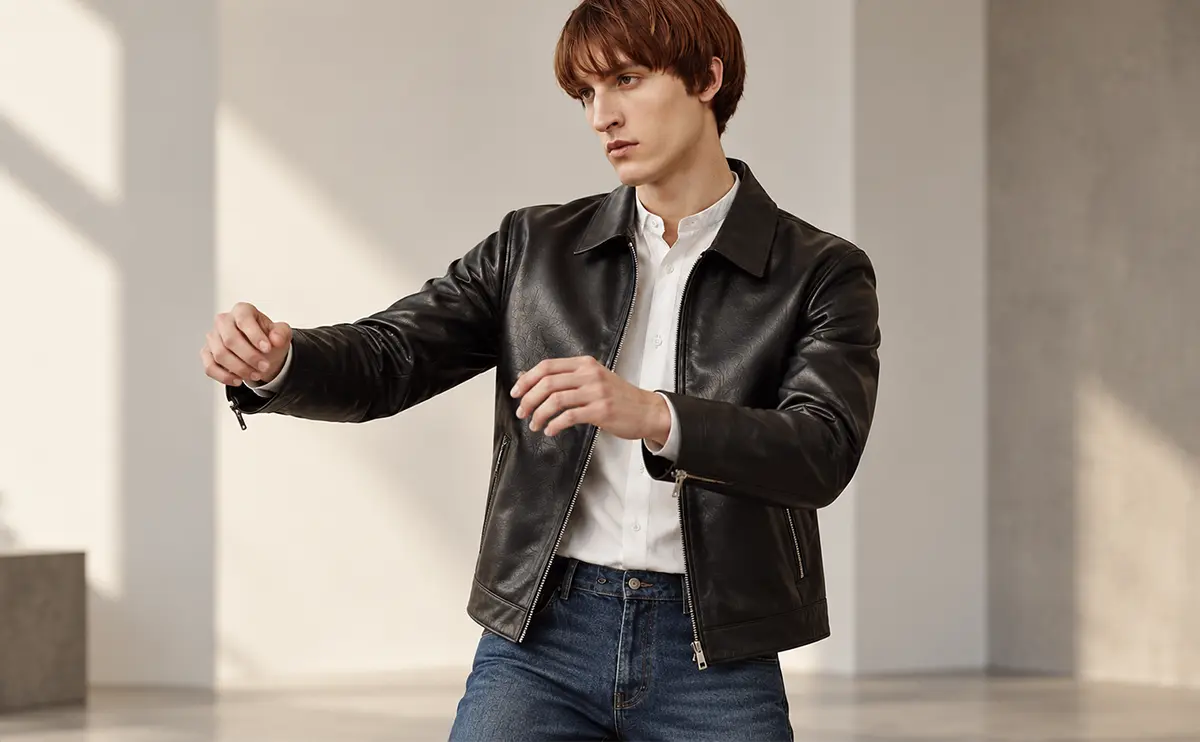
Check that you can reach forward, raise your arms and cross them in front of you without the jacket pulling hard across the back or the shoulders. A small amount of resistance is normal in new leather. A strong feeling of restriction is a sign the jacket is too small.
Layering
Decide how you will wear the jacket before choosing a size. If you plan to wear thick sweaters or hoodies underneath, you will need more room through the chest and sleeves. If you mostly wear it over a shirt or tee, a closer fit will look cleaner. Try the jacket with the heaviest layer you realistically expect to wear.
Fit Checklist
| Area | A leather jacket generally fits well when… |
|---|---|
| Shoulders | The seam sits at or close to the edge of your shoulder bone |
| Chest | You can zip or button it comfortably, with no strain lines across the front |
| Sleeves | They end around the wrist bone with your arms down |
| Length | It ends at the point intended for the style, without riding up when you move |
| Waist | It follows your shape without pulling or flaring |
| Mobility | You can reach forward and raise your arms without strong resistance |
| Layering | There is room for the clothing you plan to wear underneath |
Fit terms vary between brands, so check each product’s size chart and measure a jacket you already own and like. Slim, regular and relaxed fits are all legitimate. The right one depends on the style and how you plan to wear it.
Do Leather Jackets Stretch or Break In?
Leather does soften and adapt with wear, but only to a limited degree. Over weeks and months, the leather relaxes at the elbows, shoulders and areas that move most, and creases begin to form where you flex. The jacket may feel slightly roomier or more comfortable, particularly in stiffer hides. This is called the break-in period.
How much this happens depends on the hide and thickness. Heavier, firmer leather often has a longer break-in and may soften noticeably. Thin, soft leather such as lambskin starts out comfortable and changes less.
What break-in does not do is turn a jacket that is a full size too small into one that fits. A jacket that is tight across the shoulders or chest in the store will usually remain tight. Avoid buying a size down in the hope that it will stretch, because pushing leather past its limits can distort seams or the finish. Choose the size that fits correctly now, and expect small improvements in comfort over time.
How to Choose the Right Leather Jacket
Use these steps in order. Each narrows the options for the next.
Step 1: Decide How You Will Use It
Think about where and how often you will wear it:
- daily casual wear
- fashion or occasional wear
- cold weather
- motorcycle-inspired styling
- smarter outfits
A jacket worn five days a week has different needs from one worn on weekends. If you actually ride a motorcycle, you need certified protective gear, not just a leather jacket.
Step 2: Choose the Right Leather
Match the leather to the use. Frequent hard wear points toward cowhide or goatskin. Comfort and a lighter feel point toward lambskin. Cold weather points toward shearling. See the comparison above.
Step 3: Choose the Jacket Style
Match the style to your wardrobe and taste. Biker for a bolder, structured look, cafe racer for minimal everyday wear, bomber for short and casual, aviator or shearling for warmth, and blazer for smarter outfits.
Step 4: Check the Fit
Use the fit checklist above. Pay particular attention to the shoulders and plan around the layers you will actually wear.
Step 5: Inspect Construction
Look closely at:
- Stitching: even, tight and straight, with no loose threads
- Seams: flat and aligned, with no puckering
- Zipper: smooth, sturdy and well attached
- Hardware: snaps, buckles and rivets that feel solid and finished
- Lining: neatly sewn, with no loose areas
- Pockets: reinforced and symmetrical
- Finishing: clean edges and consistent color
The next section expands on this.
Step 6: Choose the Color
Black is a sharper, more versatile choice for most wardrobes. Brown has a warmer, more casual look that shows aging more clearly. See the color section below.
Step 7: Consider Your Budget
Think about what you are paying for: the leather, the amount of material, the construction, the lining, the hardware and the design. A higher price does not guarantee higher quality, and a lower price does not always mean a poor jacket. Weigh price against the materials and workmanship you can see and verify.
How to Tell If a Leather Jacket Is Good Quality
No single feature proves a jacket is good. Quality comes from many small details agreeing with each other. Use this checklist to inspect a jacket in person or review product photos and descriptions.
The leather
- Natural character: Real leather usually shows small variations in grain and texture. Perfect uniformity can mean a heavily corrected or coated surface, though this is not automatically a flaw.
- Surface coating: A surface that looks and feels like plastic, with a very glossy or stiff coating, may suggest heavy finishing.
- Even color: Color should be consistent across panels, apart from natural variation.
- Feel: The leather should feel pliable and appropriate for the style, not brittle or papery.
The construction
- Stitching: Look for tight, even, straight stitches, especially at stress points like the underarms and pocket corners.
- Seams: Seams should lie flat, with no puckering or twisting.
- Panels: Leather panels should match in texture and color where they meet, and the grain should look consistent across the jacket.
- Symmetry: The two sleeves, pockets and collar sides should match.
- Edges: Cut edges and hems should be cleanly finished, not frayed or uneven.
- Pockets: Pockets should be well attached and reinforced, with clean openings.
- Reinforcement: Look for extra stitching or backing at stress points.
The hardware and lining
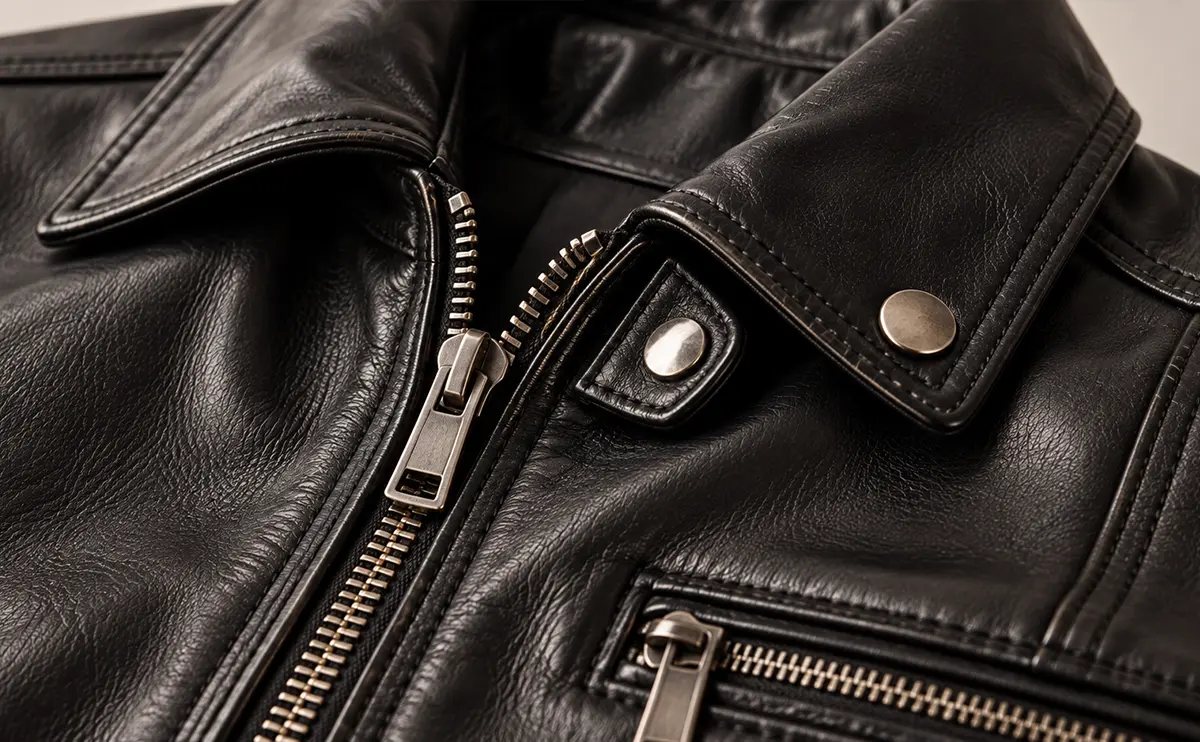
- Zipper: It should run smoothly, sit flat and feel robust. A rough or catching zipper is a common early failure point.
- Hardware: Snaps, buckles and studs should be firmly attached with an even finish.
- Lining: It should be neatly sewn, lie flat and match the jacket’s purpose.
About odor
A strong chemical smell can be a sign of heavy finishing, but smell alone cannot prove or disprove authenticity or quality. Treat it as one small clue at most.
Tests to avoid
You may see online “tests” such as burning a small piece, scratching the surface, or soaking a corner of the jacket. Do not do these. They damage the garment, and none of them reliably identifies the material or the grade. Even experienced buyers cannot confirm leather type with a single home test. Rely on a clear product description, a transparent seller, visible construction and a reasonable return policy instead.
Leather Jacket Lining Explained
The lining is easy to overlook, but it strongly affects comfort and how the jacket is worn across the seasons.
| Lining | Typical feel | Effect on the jacket |
|---|---|---|
| Polyester | Smooth, durable | Slides on easily and resists wear, but breathes less |
| Viscose | Soft, smooth | More breathable and comfortable against the skin |
| Cotton | Natural, a little less slippery | Breathable, though it can grip clothing more |
| Quilted | Padded | Adds warmth, and some bulk |
| Shearling | Wool-lined | Very warm, best for cold weather |
What this means for the buyer:
- Comfort: Breathable linings feel better in warm or mixed conditions.
- Warmth: Quilting or shearling suits colder weather, while a thin lining suits mild weather.
- Ease of wear: A smooth lining makes it easier to slip the jacket on over layers.
- Season: If you want a year-round jacket, a lightly lined, breathable option is often the most flexible.
Leather Jacket Thickness and Weight
Thickness shapes how a jacket feels, how heavy it is and how it ages. Thicker leather is usually stiffer, heavier and more structured, with a longer break-in. Thinner leather is lighter, more flexible and more comfortable straight away.
- Fashion jackets: Often use thinner, softer leather for a lighter, more drapey feel.
- Everyday jackets: Generally use a mid-weight leather that balances comfort and durability.
- Heavy-duty jackets: Use thicker leather for structure and stronger resistance to wear, at the cost of weight and stiffness.
Thicker is not automatically better. A very thick jacket can feel heavy and restrictive, which is a poor choice for someone who wants an easy, comfortable everyday layer. The right thickness depends on use. Specific thickness measurements vary by maker and are not standardized across the industry, so look for the weight and feel described in the product details, and try the jacket on where possible.
Black vs Brown Leather Jackets
Neither color is objectively better. Each suits a different look.
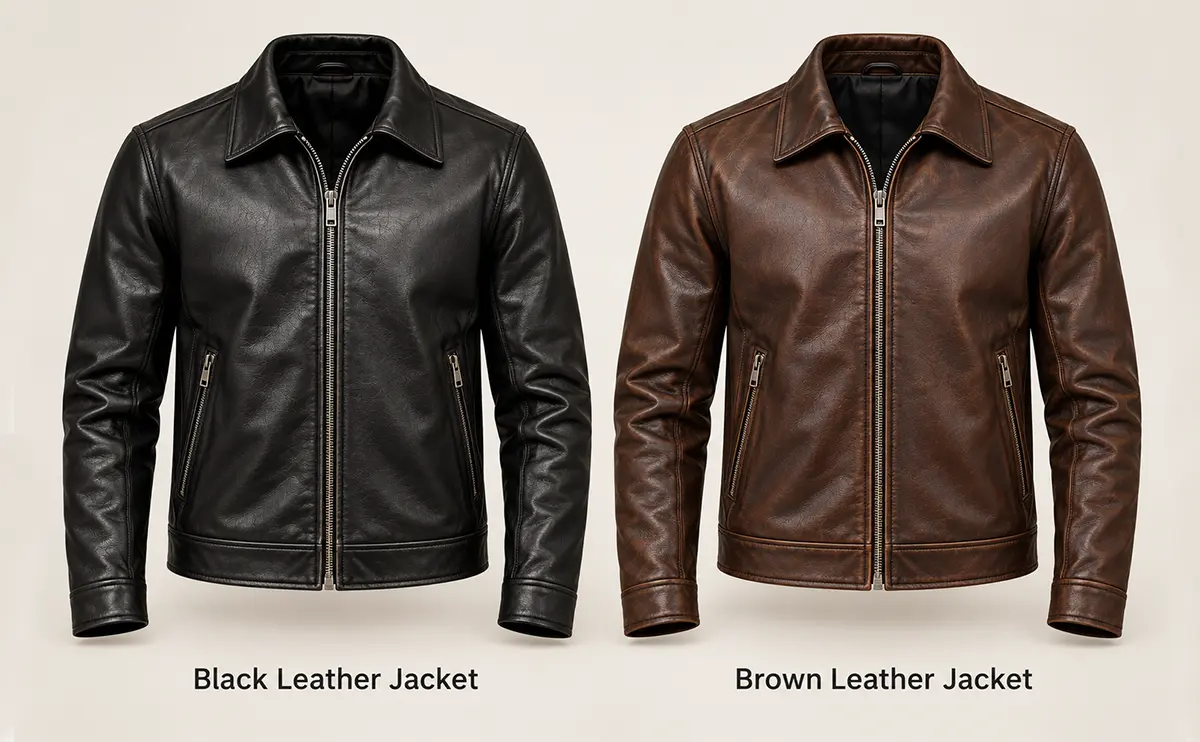
Black is sharper and more versatile with most wardrobes. It works well with minimal and modern outfits, pairs easily with almost any color, and has a strong association with biker styling. Black also tends to hide small marks well.
Brown is warmer and more casual. It has a heritage and vintage feel, works well with denim and earthy tones, and tends to show aging and patina more visibly, which many wearers value. Shades range from deep chocolate to lighter tan, and tan is the most casual and the one that shows wear the most.
If you want one jacket to work in the widest range of situations, black is often the safer choice. If you prefer a softer, more relaxed look and like a jacket that changes visibly over time, brown is worth considering. Browse or . A fuller comparison can be added as a separate article.
How Much Should a Good Leather Jacket Cost?
There is no fixed price that defines a good leather jacket, and any rigid figure would be misleading. Prices vary because of several factors:
- Leather and hide: the type, grade and quality of the hide
- Amount of leather: longer and larger jackets use more material
- Tanning and finishing: the process used to produce the leather
- Construction: the care taken in cutting, stitching and finishing
- Lining and hardware: the quality of zippers, snaps and interior materials
- Manufacturing location and labor
- Brand and design complexity
A higher price can reflect better materials and workmanship, but it can also reflect branding and markup. A lower price can reflect efficient production, but sometimes it reflects compromises in leather or construction. The most useful approach is to judge value by construction, material, fit and intended use rather than price alone. Compare what is actually described and visible, and consider cost per wear over the years you expect to keep the jacket.
How Long Do Leather Jackets Last?
A well-made leather jacket can remain wearable for many years, but lifespan varies considerably. It depends on the quality of the leather and construction, how often it is worn, the climate, how it is stored and how well it is maintained.
The main factors are:
- Material quality: better hides and finishing generally hold up longer.
- Construction: strong seams, zippers and linings often fail before the leather does.
- Frequency of wear: a jacket worn daily ages faster than one worn occasionally.
- Climate: heat, humidity and repeated exposure to rain can accelerate wear.
- Storage: poor storage can cause creasing, mold or drying.
- Maintenance: gentle cleaning and appropriate conditioning help keep leather supple.
- Exposure: prolonged moisture, direct heat and sunlight can damage leather.
Many owners expect to keep a good jacket for years, and some are repaired and re-lined to extend their life. But no single number applies to every jacket, so treat any specific lifespan claim with caution.
How to Care for a Leather Jacket
This is a short overview. A fuller guide is planned in the.
- Wipe gently. Remove dust and dirt with a soft, slightly damp cloth.
- Check the care label. Follow the maker’s instructions, since finishes differ.
- Avoid excess water. If the jacket gets wet, blot it and let it dry.
- Dry naturally. Let it air dry at room temperature on a suitable hanger.
- Keep it away from direct heat. Radiators, hair dryers and heaters can dry out and crack leather.
- Use suitable products. Choose cleaners and conditioners designed for the type of leather, and test on a hidden area first.
- Condition only when appropriate. Over-conditioning can darken or soften leather unevenly, so apply a little and not too often.
- Store properly. Use a wide, shaped hanger and a breathable garment bag, not plastic.
- Avoid prolonged sunlight. It can fade and dry the surface.
- Use a professional for difficult stains. For oil, ink or heavy staining, a specialist leather cleaner is safer than home experiments.
Avoid risky home remedies, such as household cleaners or heat treatments, which can permanently damage the finish.
Common Leather Jacket Buying Mistakes
- Choosing purely by appearance. A jacket also has to suit your climate, use and comfort needs.
- Ignoring fit. Fit, especially in the shoulders, matters more than almost any other factor.
- Assuming all real leather is the same. Hide, grade and finishing vary considerably.
- Buying too small expecting it to stretch. Leather softens, but it does not change size significantly.
- Ignoring the lining. It affects comfort, warmth and ease of wear.
- Ignoring hardware. Weak zippers and snaps tend to fail first.
- Confusing fashion jackets with protective riding gear. A biker-style jacket is not necessarily certified for motorcycle use.
- Buying by price alone. Cheap can be poor value, and expensive does not guarantee quality.
- Overlooking return and size policies. Leather is hard to judge online, so a clear policy matters.
- Skipping care requirements. Know what upkeep the jacket needs before you buy.
Which Leather Jacket Is Right for You?
These are general suggestions, not rigid rules.
| If you want… | Consider… |
|---|---|
| A rugged, structured appearance | A cowhide biker jacket |
| Minimal, clean styling | A cafe racer |
| Soft, comfortable everyday leather | A lambskin jacket |
| A casual, aviation-inspired look | A leather bomber |
| Flexibility with a textured grain | A goatskin jacket |
| Cold-weather warmth | A shearling or aviator jacket |
| A smarter, tailored look | A leather blazer |
| The most flexible color for most outfits | Black, then brown |
If you want to see these styles side by side, start with the .
FAQ’s
It depends on use. Cowhide is often chosen for toughness and structure, lambskin for softness and light weight, goatskin for a balance of flexibility and strength, and sheepskin or shearling for warmth.
Neither is better overall. Cowhide is generally firmer and more resistant to abrasion, while lambskin is softer and lighter. Choose cowhide for structure and heavy use, and lambskin for comfort and a refined fit. See [Internal Link: Cowhide vs Lambskin Leather].
It should fit closely but not feel restrictive. It should sit flat at the shoulders, close without strain, and let you move your arms comfortably. If you plan to layer, leave room for it.
Slightly. Leather softens and adapts with wear, especially at the elbows and shoulders, but it does not stretch a full size. Buy the size that fits properly now.
Yes. The term indicates the material is real leather. It does not describe quality or grade, which depend on the hide, processing and construction.
A biker jacket typically has an asymmetrical zipper, wide lapels and more hardware. A cafe racer has a straight zipper, a small collar and a cleaner, more minimal look. See [Internal Link: Biker vs Cafe Racer].
No. Leather is naturally somewhat water-resistant, and some finishes improve this, but ordinary leather jackets are not fully waterproof. Water can stain or stiffen the leather.
Light rain is usually manageable, but prolonged exposure can damage the leather. If it gets wet, blot it, air dry it naturally away from heat, and avoid heavy rain where possible.
Check the stitching, seams, zipper, hardware, lining and finishing, and look for consistent leather and symmetry. No single test is reliable. Avoid damaging “tests” like burning or scratching.
Black is generally the more versatile of the two for most wardrobes, while brown suits warmer, more casual styling. Both can work well depending on your clothing.
A well-made jacket can last many years with good care, but lifespan varies with quality, use, climate and storage.
T-shirts, shirts, fine knitwear and hoodies all work. Choose the fit with your thickest planned layer in mind, and remember that bulkier layers need more room through the chest and sleeves.