
Blog

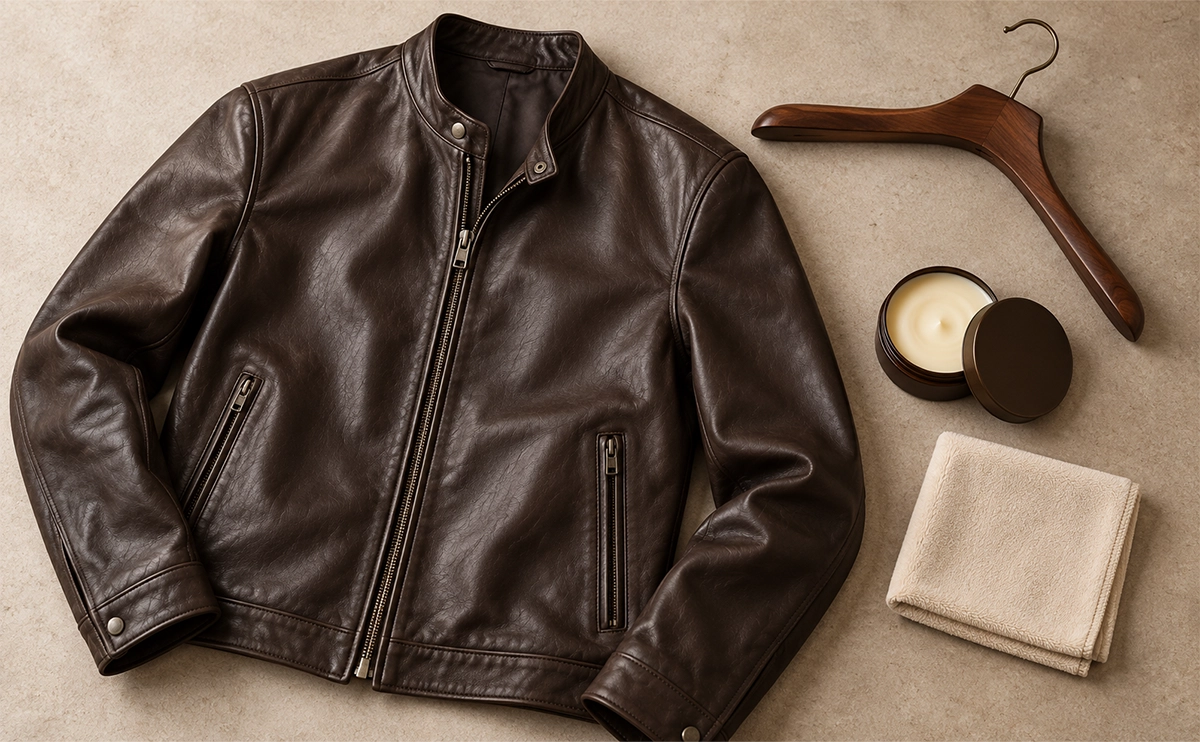
A leather jacket does not need aggressive cleaning or frequent conditioning. Good care is mostly about avoiding damage: removing surface dirt gently, dealing with moisture correctly, conditioning only when needed, and storing the jacket somewhere cool and dry, away from prolonged sunlight and heat.
This guide covers routine cleaning, conditioning, drying, stain handling, storage, hangers, moisture, sunlight, mold prevention and when to use a professional leather cleaner. It is about everyday ownership, not repair or restoration.
Always check the garment care label first. If the label or the manufacturer says something different from this guide, follow the label.
How do you care for a leather jacket? Care for a leather jacket by wiping away surface dirt gently, avoiding soaking and direct heat, conditioning only when appropriate, and storing it on a wide hanger in a cool, dry, ventilated place. Always check the care label and test cleaners or conditioners on a hidden area first.
One rule before anything else: leather care depends on the leather type, finish, coating, color and the manufacturer’s instructions. Before using any cleaner or conditioner, test it on a small hidden area first (inside a hem, under a collar or inside a cuff), let it dry fully, and check for darkening, staining or texture change. No single product is safe for every leather.
Leather Jacket Care at a Glance
| Care Task | Recommended Approach | Avoid |
|---|---|---|
| Dust | Soft, dry cloth | Aggressive brushing |
| Light cleaning | Slightly damp cloth, if suitable for that leather | Soaking |
| Conditioning | Appropriate leather conditioner, when needed | Over-conditioning |
| Drying | Air dry naturally | Hair dryer or radiator |
| Storage | Cool, dry, ventilated space | Plastic bags |
| Hanger | Wide, supportive hanger | Thin wire hanger |
| Sunlight | Limited exposure | Long direct exposure |
| Stains | Blot and treat cautiously | Hard rubbing |
| Mold | Isolate and assess carefully | Storing while damp |
Suede, nubuck, shearling and heavily coated leather may need different care. See the material sections below.
How to Clean a Leather Jacket
The safest approach is a conservative one. Exact methods vary by finish, so treat these steps as a general outline for smooth, finished leather rather than a universal recipe.
If a mark does not lift with gentle wiping, stop. Repeated scrubbing is more likely to damage the finish than remove the mark.
Can You Wash a Leather Jacket?
Usually, no. A leather jacket should not be machine washed or submerged in water unless the manufacturer explicitly says it can be.
Excessive water can:
- strip natural oils from the leather
- leave it stiff once dry
- cause water marks and staining
- change the shape of the jacket
- affect dyes and finishes
- damage the lining or the adhesives used in construction
- Check the care label. Follow the manufacturer’s instructions first.
- Remove dust. Wipe the surface with a clean, soft, dry cloth.
- Spot-test. Try any cleaner on a hidden area and let it dry before going further.
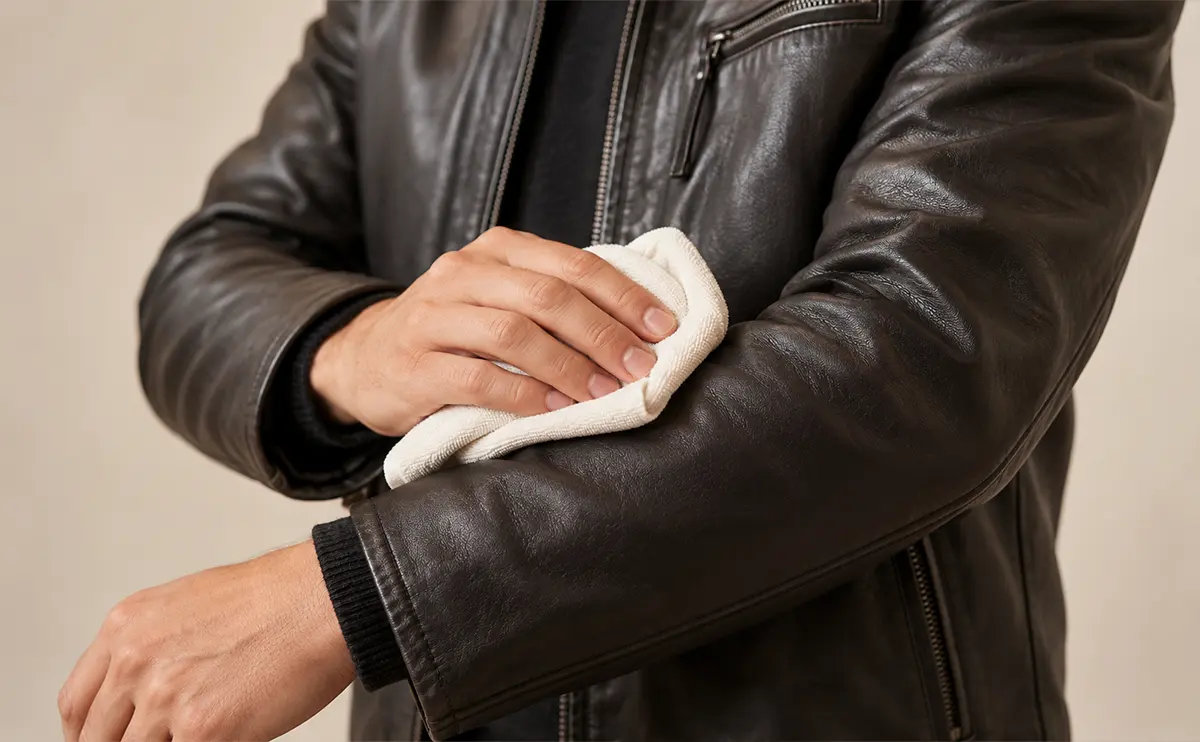
- Clean lightly. Use a leather cleaner suited to your jacket’s leather, or a lightly damp cloth, but only if that is appropriate for the finish. Work gently with the surface, not against it.
- Avoid saturation. The cloth should be barely damp. Do not soak the leather or let water pool in seams.
- Wipe away residue. Go over the area with a second clean cloth so no cleaner is left on the surface.
- Let it dry naturally. Hang the jacket on a supportive hanger at room temperature with some airflow.
If a jacket is heavily soiled, take it to a cleaner with real experience in leather garments rather than trying to wash it at home.
How Often Should You Clean a Leather Jacket?
Routine cleaning is not deep cleaning. For most jackets, ordinary upkeep looks like this:
- remove dust when you notice it
- wipe minor surface marks promptly, before they set
- deep-clean only when there is a real reason to
- avoid frequent chemical cleaning
There is no useful fixed schedule. How often a jacket needs attention depends on how much it is worn, the climate, what it is exposed to (smoke, rain, public transport, makeup, dye transfer from other fabrics) and the leather finish. A jacket worn daily in a dusty city needs more attention than one worn occasionally.
How to Condition a Leather Jacket
A suitable conditioner may help replenish oils and reduce dryness in some finished leathers. It is not a cleaner, a waterproofer or a repair product, and not every leather benefits from it. If you are unsure what your jacket is made from, the Complete Leather Jacket Guide explains the main leather types and finishes.
- Check the care label. Some manufacturers recommend specific products or advise against conditioning.
- Make sure the leather is clean and dry. Conditioner applied over dirt can trap it.
- Test on a hidden area. Wait until it has dried and check for darkening or marks.
- Apply a very small amount to a soft, clean cloth, not directly onto the jacket.
- Spread it evenly in light, gentle strokes, one panel at a time.
- Allow it to absorb at room temperature, following the product’s instructions.
- Remove any excess with a clean, dry cloth if the surface feels tacky or greasy.
More conditioner is not better. Over-conditioning can darken leather, make it excessively soft, leave residue on the surface and change its appearance. A thin layer is almost always enough.
How Often Should You Condition Leather?
There is no safe universal schedule. How often (or whether) a jacket needs conditioning depends on:
- the climate, since very dry or very humid conditions both matter
- the leather type and finish
- how much it is exposed to sun, wind, rain and heat
- how often it is worn
Signs that leather may need conditioning include:
- it feels unusually dry
- it looks dull compared with how it looked before
- it feels less flexible than normal
But a dry-looking surface does not always mean conditioner is the answer. Some coated, pigmented or specialty leathers do not absorb conditioner in the same way, and the wrong product can leave a film or change the finish. If you are unsure, ask the manufacturer or a leather specialist before treating the whole jacket.
What Leather Conditioner Should You Use?
The safest choices are:
- a conditioner formulated for your jacket’s specific leather type and finish
- a product the manufacturer recommends
Avoid cooking oils, olive oil, coconut oil, petroleum jelly and random household creams. Household oils can darken leather, turn rancid over time and leave uneven residue, and they were not designed for finished leather garments.
Because finishes and dyes vary so much, no product should be treated as interchangeable with another. Always test first.
What to Do If Your Leather Jacket Gets Wet
Leather is not waterproof, but a little rain is usually manageable if you handle the drying properly.
- Gently blot excess water with a clean, absorbent cloth.
- Do not rub. Rubbing can spread moisture and mark the surface.
- Put the jacket on a supportive hanger so it keeps its shape.
- Let it air dry naturally at room temperature with some airflow.
- Keep it away from radiators, fireplaces, heaters and hair dryers.
- Once fully dry, inspect the leather for water marks, stiffness or color change.
- Condition only if appropriate and needed. Not every wet jacket needs it.
Heat dries leather too quickly, which can increase stiffness and the risk of cracking. Slow drying is almost always safer. If the jacket was soaked through, or the lining stays damp, consider asking a leather specialist to assess it.
Can You Use a Hair Dryer on Leather?
No. Direct high heat is generally not recommended. It can dry out the leather, harden areas unevenly, affect the finish, and cause shrinkage or distortion. Natural air drying is the safer option.
How Should You Store a Leather Jacket?
Aim for storage that is:
- cool
- dry
- ventilated
- away from prolonged sunlight and heat sources
- not compressed by other garments
Avoid damp basements, hot attics, tightly packed closets and plastic garment bags for long-term storage, since plastic can trap moisture. If you want dust protection, a breathable garment bag is a better choice.
What Type of Hanger Should You Use?
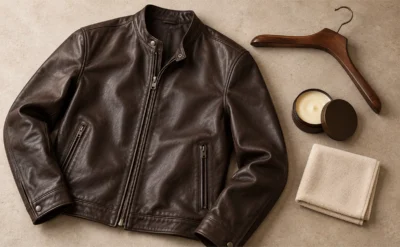
Use a wide, sturdy, shaped hanger that supports the shoulders. Leather is heavier than many fabrics, so poor support can affect the shape of the shoulders and neckline over time.
Avoid:
- thin wire hangers
- narrow plastic hangers
- hooks that pull or deform the shoulder
Should You Fold a Leather Jacket?
For normal storage, hang the jacket rather than folding it. Long-term folding can set creases that are hard to remove.
Folding is sometimes unavoidable when traveling. If you must, keep it short-term, fold loosely, and avoid putting heavy items on top. Hang the jacket up as soon as you arrive.
How Does Sunlight Affect Leather?
Prolonged direct sunlight may fade color, dry the leather, change the finish and cause uneven discoloration. The key word is prolonged. Wearing a jacket outdoors on a sunny day is very different from leaving it on a sunlit chair or a car seat for hours or days.
In practice, avoid storing or displaying a jacket where strong sun falls on it regularly, such as next to a window, and rotate or move it if that happens.
How Does Heat Affect Leather?
Keep leather away from:
- radiators and heaters
- fireplaces
- hot car interiors for long periods
- direct heat of any kind used to speed up drying
Heat can accelerate moisture loss and may affect the shape or finish of the jacket.
How to Handle Moisture and Humidity
Leather should never be stored while damp. High humidity can encourage mildew, mold and odor, while very dry environments can contribute to dryness.
The practical steps are simple:
- make sure the jacket is fully dry before it goes into the wardrobe
- store it in a ventilated space with some air circulation
- keep the storage area dry
There is no need for unverified chemical moisture treatments. Dry, ventilated storage does most of the work.
How to Prevent Mold on a Leather Jacket
Prevention is much easier than remediation. Good habits include:
- never store a jacket damp, including a damp lining
- use a ventilated closet and avoid sealed plastic storage
- keep the storage area dry
- leave some space between garments so air can circulate
- in humid climates, inspect stored jackets from time to time
What to Do If You Find Mold on Leather
Be cautious. For a small amount of surface mold, separate the jacket from other garments and assess it carefully, ideally in a well-ventilated space.
Take it to a professional leather cleaner if:
- the mold is extensive or keeps coming back
- the jacket is valuable
- you are unsure what finish the leather has
Mold can penetrate materials, and the wrong treatment can damage the leather or spread the problem. This guide deliberately does not give a home mold-removal recipe: mold cannot always be safely removed at home.
How to Remove Stains from a Leather Jacket
Stain treatment depends heavily on the type of stain and the leather finish. The general rule is simple: blot, do not rub. Rubbing pushes the stain deeper and can damage the finish. Not every stain can be removed, and some are better handled professionally.
- Water marks: Let the jacket dry naturally, then assess. Many fade or become less noticeable once the leather is fully dry.
- Food or drink spills: Blot promptly with a clean, absorbent cloth to lift as much as you can. Do not scrub.
- Oil or grease: Do not rub aggressively or soak the area with household solvents, which can spread the stain or damage the finish. A specialist is the safer route.
- Ink: Avoid experimenting with alcohol or acetone. Ink on leather is usually a job for a professional.
- Unknown stains: If you do not know what caused it, leave it alone and ask a leather specialist.
Can You Use Soap on a Leather Jacket?
Do not use strong household soaps or detergents as general leather cleaners. They can strip oils, leave residue and affect dyes and finishes. If you use any cleaning product, choose one designed for your specific leather type and test it on a hidden area first. There is no single household fix that works on every leather.
Can You Use Alcohol or Disinfectant on Leather?
Not as a routine cleaner. Alcohol-based products can dry leather, affect dyes, damage coatings and alter the finish. If you need to treat a jacket for a specific hygiene concern, a leather specialist can advise on a safe approach.
Cowhide vs Lambskin Care
Both need the same basics: gentle cleaning, no direct heat, dry storage and a supportive hanger. The difference is in how forgiving they tend to be.
- Cowhide is often firmer and more rugged, and generally more tolerant of everyday wear. It still needs proper care.
- Lambskin is often softer and more delicate, and can be more susceptible to scratches and marking. It tends to benefit from gentler handling and more care when wet or stored.
These are general tendencies, not guarantees. Finish and construction matter as much as the animal. For a fuller comparison, see Cowhide vs Lambskin Leather Jackets.
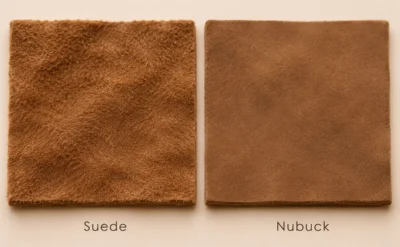
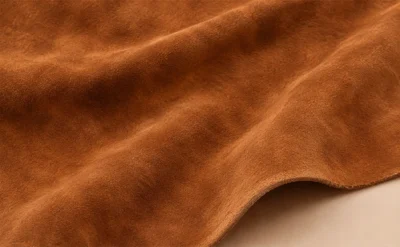
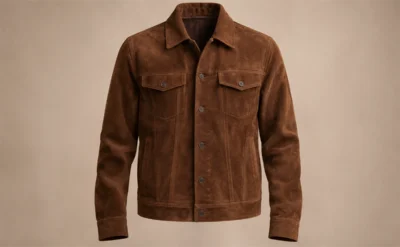
What About Suede and Nubuck Jackets?
Suede and nubuck should not automatically be cleaned like smooth finished leather. They usually need:
- a specialty suede/nubuck brush
- products designed specifically for suede or nubuck
- different stain treatment from smooth leather
Avoid wet-cleaning them at home. For difficult stains, take the jacket to a professional.
What About Waxed and Coated Leather Jackets?
Waxed and coated leathers have a surface treatment that smooth, uncoated leather does not, so the standard conditioning advice in this guide often does not apply to them.
- Waxed leather: check the care label for how the wax finish should be maintained. Do not assume a general conditioner is suitable, since it can change the look of the finish. Avoid heat, which can soften or move the wax.
- Coated or pigmented leather: the coating sits on top and may not absorb conditioner. Gentle wiping with a soft cloth is usually the starting point, and a wrong product can leave a film or mark.
- Both: test everything on a hidden area first, and use only products the manufacturer recommends or that are made for that finish.
If a waxed or coated jacket is stained, scuffed or heavily soiled, a leather specialist is the safer choice.
What About Faux Leather Jackets?
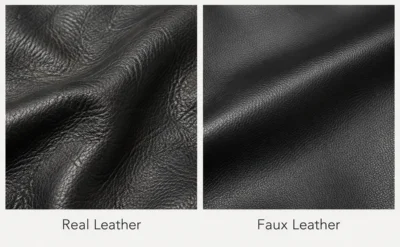
Faux leather is cared for differently from real leather. In general, a traditional leather conditioner is not necessary, and wipe-clean methods may be more appropriate, but this depends on the coating and the manufacturer’s instructions. Polyurethane (PU) and other synthetics are not real leather and should not be treated as such. For the differences, see Real Leather vs Faux Leather Jackets.
When Should You Use a Professional Leather Cleaner?
Consider a specialist for:
- major stains, oil stains and ink
- extensive mold or strong odors
- dye transfer
- vintage or valuable jackets
- shearling, suede or nubuck
- major water exposure
- any jacket where you are unsure of the leather or finish
Choose a cleaner with specific experience in leather garments. A normal dry cleaner is not automatically a leather specialist, so ask before you hand the jacket over.
Leather Jacket Care Mistakes to Avoid
- Machine washing without manufacturer approval
- Soaking the jacket
- Using direct heat to dry it
- Over-conditioning
- Using household oils
- Scrubbing stains aggressively
- Using alcohol or acetone casually
- Storing the jacket while damp
- Leaving it in prolonged direct sunlight
- Using a thin wire hanger
- Sealing it long-term in non-breathable plastic
- Ignoring the care label
Simple Leather Jacket Care Routine
Care does not need to be complicated. A routine like this is enough for most jackets.
After wear
- let the jacket air for a while
- wipe off visible dust if needed
- hang it on a proper hanger
Occasionally
- inspect for dirt, dryness or stains
- clean gently, as appropriate for the leather
When needed
- use an appropriate conditioner, after a hidden-area test
Before long-term storage
- make sure it is clean
- make sure it is fully dry, lining included
- use a sturdy, supportive hanger
- choose cool, ventilated storage
Leather Jacket Care by Situation
| Situation | What to Do |
| Light dust | Wipe gently with a soft, dry cloth |
| Light rain | Blot and air dry on a hanger |
| Heavy soaking | Air dry and assess; consider a specialist |
| Dry leather | Use an appropriate conditioner if suitable |
| Food spill | Blot quickly; do not rub |
| Ink | Professional treatment preferred |
| Mold | Isolate and assess; professional help if significant |
| Long-term storage | Clean, dry, ventilated storage |
| Wrinkles | Hang naturally; avoid direct heat |
Final Takeaway
Good leather care is mostly about moderation. The key principles are:
- clean gently
- avoid soaking
- avoid direct heat
- condition only when needed
- store the jacket dry
- use a supportive hanger
- limit prolonged sunlight
- treat serious stains professionally
A properly cared-for jacket can keep its appearance and comfort for years, but how long it lasts depends on leather quality, construction, wear, environment and maintenance.
Explore: Leather Jackets, including Men’s Leather Jackets and Women’s Leather Jackets.
FAQ’s
Check the care label, wipe dust with a soft dry cloth, test any cleaner on a hidden area, then clean lightly with a leather-suitable cleaner or a barely damp cloth if appropriate. Wipe off residue and air dry at room temperature.
Usually not. Machine washing or soaking can strip oils, stiffen leather, affect dyes and damage the lining. Only do it if the manufacturer explicitly says so.
There is no universal schedule. It depends on climate, leather type, finish, exposure and how often the jacket is worn. Condition only when the leather seems dry, dull or less flexible, and only if suitable for that finish.
One made for your jacket’s specific leather type, ideally one the manufacturer recommends. Test it on a hidden area first.
It is not recommended. Household oils can darken leather, turn rancid and leave uneven residue.
Blot gently, do not rub, hang it on a supportive hanger and let it air dry at room temperature away from heat. Inspect it once dry, and condition only if needed.
No. Direct heat can dry out and harden leather, affect the finish and distort the shape. Air drying is safer.
Hang it in a cool, dry, ventilated space, away from heat and prolonged sunlight, without crowding. Avoid long-term storage in plastic.
A wide, sturdy, shaped hanger that supports the shoulders. Avoid thin wire or narrow plastic hangers.
Prolonged direct sunlight may fade color, dry the leather and cause uneven discoloration. Ordinary short exposure while wearing the jacket is different.
Never store a jacket damp, keep the storage area dry and ventilated, avoid sealed plastic, and check stored jackets periodically in humid climates.
For major or unknown stains, oil, ink, extensive mold, strong odors, dye transfer, heavy water exposure, vintage or valuable jackets, and shearling, suede or nubuck. Choose a cleaner with leather garment experience.