

Blog

Cowhide and lambskin are both real leather, but they feel and perform differently. Cowhide is generally firmer, heavier and more resistant to abrasion. Lambskin is usually softer, lighter and more supple. The better choice depends on whether you value rugged durability and structure or immediate comfort and a more refined feel.
This guide compares the two on the points that matter when you are buying a jacket: texture, softness, weight, durability, break-in, patina, care, price, and how each suits specific styles such as biker, cafe racer and everyday jackets. If you want the broader picture of leather types, fit and styles, start with our Complete Leather Jacket Guide. This article stays focused on one decision.
Cowhide vs Lambskin at a Glance
| Feature | Cowhide | Lambskin |
|---|---|---|
| Texture | Firmer, more rugged | Softer, smoother |
| Weight | Usually heavier | Usually lighter |
| Durability | Generally high | Good, but less rugged |
| Break-in | Often longer | Usually quicker |
| Feel | Structured | Supple |
| Common uses | Biker, motorcycle-inspired, rugged jackets | Fashion, cafe racer, bomber, tailored jackets |
| Appearance | Rugged, substantial | Refined, smooth |
| Patina | Often more pronounced | Softer, subtler aging |
| Care | Durable but still needs care | Benefits from gentler handling |
| Typical buyer | Wants structure and toughness | Wants softness and comfort |
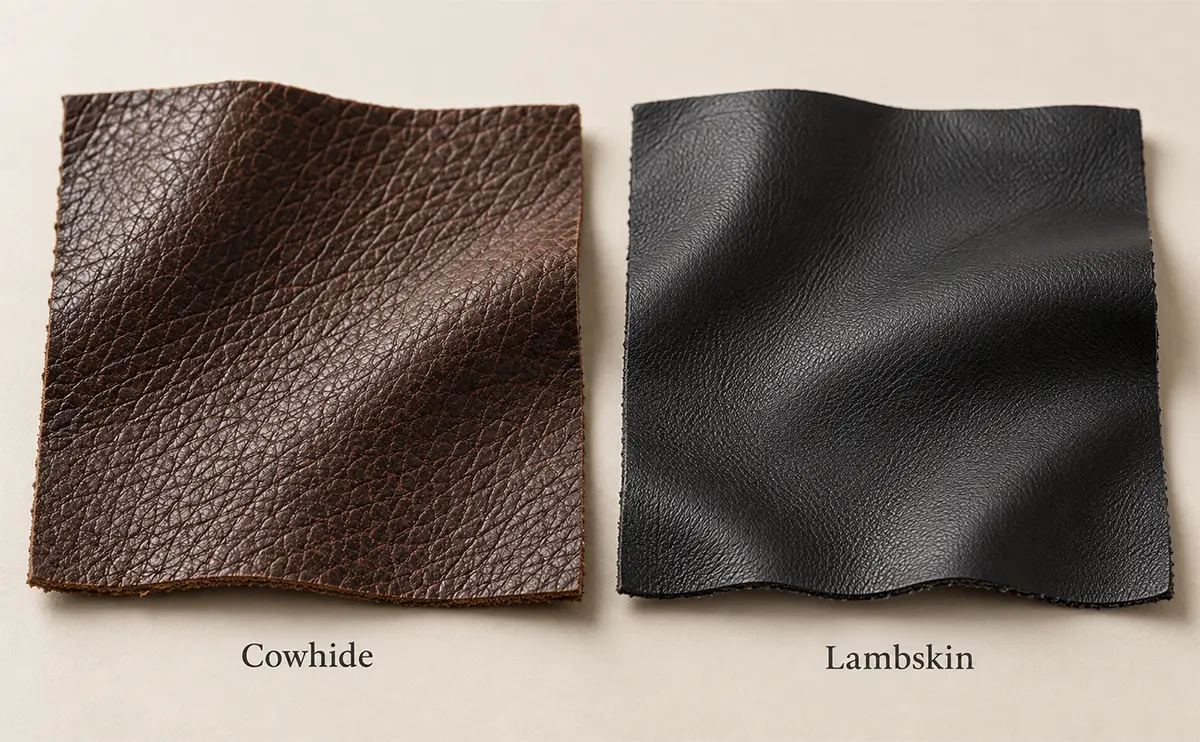
These are broad tendencies. Tanning, thickness, finish and construction can change how either leather feels and performs, and a well-processed example of one can outperform a poorly made example of the other on almost any measure.
What Is Cowhide Leather?
Cowhide comes from cattle and is one of the most widely used leathers in jackets. The fiber structure is generally dense, which gives the material its strength and its ability to hold a shape. Depending on how it is tanned, finished and cut, cowhide can range from stiff and heavy to surprisingly soft and flexible.
In jackets, cowhide is often associated with rugged and structured designs. Thicker cuts tend to resist scuffs and wear well, show strong natural grain, and keep their silhouette. The trade-off is that thicker versions usually need a longer break-in before they feel fully comfortable.
For buyers, the practical takeaway is simple. Cowhide often suits people who want a jacket that feels substantial, keeps its shape and can handle frequent wear.
Explore → Cowhide Jackets

What Is Lambskin Leather?
Lambskin comes from young sheep. It typically has finer fibers than cowhide, which is why it is generally smoother, softer and more flexible. It is also often cut thinner, so jackets made from it are frequently lighter.
Because of that flexibility, lambskin tends to drape well and feel comfortable almost immediately. It is common in fashion-oriented jackets where a clean line and a soft hand matter. The compromise is that it is generally less resistant to rough abrasion than a thick cowhide, so it rewards more careful wear.
For buyers, lambskin often suits people who want a soft jacket that feels comfortable from the first wear and has a more refined silhouette.
Explore → Lambskin Jackets

Which Is Softer: Cowhide or Lambskin?
Lambskin is generally softer and more supple. Three things drive this:
- Finer fibers. The tighter, finer structure feels smoother against the hand and the body.
- Thinner cuts. Lambskin jackets are often made from thinner leather, which adds flexibility.
- Less break-in. Because the material starts out pliable, you feel the softness from day one.
That said, this is a tendency, not a rule. Cowhide that has been tanned and finished for softness can be comfortable and flexible, and a thick or heavily coated lambskin will not feel as buttery as a thin one. If softness is your top priority, look for descriptions of the finish and thickness, not just the hide name.
Which Is Stronger and More Durable?
Cowhide is generally more rugged and more resistant to abrasion, particularly in thicker jacket constructions. Its dense fiber structure is a large part of why it is so common in biker and motorcycle-inspired jackets, where resistance to scuffs and repeated wear is part of the appeal.
Lambskin is durable enough for everyday fashion use and can last well when treated properly. It is, however, more vulnerable to snagging, scratches and rough abrasion, so it benefits from more careful handling. Think of it as a leather that rewards gentle use rather than one built for punishment.
Strength also depends on more than the animal. A thin, poorly finished cowhide is not automatically tougher than a well-made lambskin, which brings us to lifespan.
Which One Lasts Longer?
Leather lifespan depends on much more than hide type. These factors all matter:
- Construction and stitching quality
- Hardware, including zippers and snaps
- Tanning and finishing
- Thickness
- How often the jacket is worn
- Climate and storage
- Care over time
With that in mind, the practical tendency is this. A well-made cowhide jacket often handles hard, frequent wear better over time. A well-maintained lambskin jacket can still last many years if it is worn more gently. Neither material comes with a guaranteed lifespan, and how you wear and look after the jacket usually matters more than which hide it is made from.
Which Is Heavier?
Cowhide is often heavier because it is commonly used in thicker, more structured forms. Lambskin is usually lighter and easier to wear for long periods.
There is an important exception. A thin cowhide jacket can weigh less than a heavily lined or heavily trimmed lambskin jacket, because lining, insulation and hardware all add weight. Compare the listed weight, lining and construction where available instead of assuming from the hide name.
Weight matters more than people expect, especially for:
- Daily wear, where a heavy jacket becomes tiring
- Layering, where a thick jacket can feel bulky over knitwear
- Travel, where you may carry the jacket as much as wear it
- Warmer climates, where extra weight often means extra heat
Which Breaks In Faster?
Lambskin is usually comfortable from the start and has a less dramatic break-in period. You may notice it relaxing slightly with wear, but the change is typically subtle.
Cowhide, especially in thicker versions, may need more time. It gradually softens and shapes itself to your body through regular wear, and many buyers enjoy that process because the jacket ends up feeling personal.
One caution: do not buy a cowhide jacket too small expecting it to stretch into place. Leather may give a little in some areas, but a jacket that is tight across the shoulders or chest on day one rarely becomes truly comfortable. Choose the size that fits properly now. Our Leather Jacket Fit Guide explains how.
Which Feels More Luxurious?
“Luxurious” is subjective, and it is worth separating the feeling from the quality.
Lambskin often feels more luxurious to many buyers because it is softer, smoother, lighter and more supple. The drape is fluid and the hand feel is immediately noticeable.
Cowhide can feel more premium to buyers who value different qualities: substance, natural grain, structure and rugged character. A solid, characterful cowhide jacket can feel richer than a thin, soft jacket that lacks presence.
Softness is not the only measure of leather quality. Which feels better depends on what you associate with a well-made jacket.
Which Looks Better?
There is no universal answer. The two leathers simply tend to create different looks.
Cowhide
- Rugged and structured
- Often a stronger, more visible grain
- A heritage, workwear or motorcycle-inspired feel
- Suits bold jacket designs with strong lines and visible hardware
Lambskin
- Smooth and refined
- Cleaner drape and softer folds
- Suits minimal, slim or tailored designs
Style preference matters more than any objective ranking. Decide the look you want first, and the leather choice often becomes easier.
Which Develops Better Patina?
Patina is the visible character leather picks up over time: creasing, darkening, small scuffs and changes in surface tone.
Cowhide often develops more visible creasing, darkening and surface character, especially in less heavily coated finishes. Many people choose it specifically for that evolving, lived-in look.
Lambskin can also age beautifully, but it usually develops subtler changes. Its softer surface may show scratches more easily, which some buyers see as character and others see as damage.
Not all leather develops patina equally. Heavy surface coatings can limit visible change in either material, so finish matters as much as hide.
Cowhide vs Lambskin for Biker Jackets
This is where the choice is often most obvious. Cowhide is frequently preferred for biker styles because of:
- Structure that holds the jacket’s bold, angular shape
- Durability and abrasion resistance
- The ability to carry heavy hardware without sagging
Lambskin biker jackets are softer, lighter and more fashion-oriented. They are easy to wear casually and comfortable straight away, though they are less rugged for hard use.
For a rugged, traditional biker look, cowhide is often the better match. For a softer fashion biker jacket, lambskin can work very well.
Explore → Biker Jackets
Cowhide vs Lambskin for Cafe Racer Jackets
Cafe racer jackets are minimal by design, with clean lines and a slim, streamlined cut. That makes the leather choice especially visible.
- Cowhide cafe racer: more structured, more rugged and with a firmer silhouette. It keeps the jacket’s lines crisp and holds up to regular use.
- Lambskin cafe racer: softer, with a cleaner drape and a more refined look. It is comfortable from day one and sits closely without feeling stiff.
If you want a cafe racer that feels sleek and easy, lambskin is a natural fit. If you want one with more presence and toughness, cowhide is worth considering. Browse the Cafe Racer Jackets collection for both.

Which Is Better for Everyday Wear?
Lambskin is lighter, softer and easier to wear for long periods. It works well with casual and smart-casual outfits and rarely feels like a burden by the end of the day.
Cowhide is more substantial and better suited to frequent rough wear, though it may feel heavier, particularly in thick or lined versions.
For comfort-first everyday wear, lambskin often wins. For tougher daily use, cowhide may be the better choice.
Which Is Better for Fashion Jackets?
Lambskin is common in slim jackets, leather blazers, cafe racers, tailored designs and soft bombers, because its drape and lightness support a refined silhouette.
Cowhide is common in biker jackets, structured bombers and rugged casual outerwear, where shape and toughness matter more than drape.
These are habits of the market, not strict rules. You will find structured lambskin jackets and soft cowhide jackets, so check the specific product description.
Which Is Better for Motorcycle Jackets?
It helps to separate two different things:
- A motorcycle-inspired fashion jacket, designed for style
- A protective motorcycle jacket, designed for riding
Cowhide is commonly associated with riding gear because of its abrasion resistance. But real riding protection depends on much more than the hide: certified materials, seam strength, armor, testing and overall construction.
A cowhide fashion jacket should not be assumed to be safe for riding. If you ride, choose gear specifically designed and certified for riding, and treat motorcycle-inspired jackets as fashion pieces.
Which Is Better in Warm Weather?
Lambskin is often lighter and can be more comfortable in mild weather. Cowhide can feel heavier, particularly in thick or lined versions.
Still, lining, thickness, ventilation and climate matter as much as the hide. An unlined or lightly lined cowhide jacket may be more comfortable than a heavily lined lambskin one. Neither leather is a true hot-weather material, as leather generally breathes less than many fabrics.
Which Needs More Care?
Lambskin generally benefits from gentler handling. Its softer surface can show scratches and marks more easily, so it is worth avoiding rough contact, sharp objects and overloaded pockets.
Cowhide is generally more forgiving, but it is not maintenance-free. It still needs proper storage, sensible cleaning and occasional conditioning, depending on the finish. Our Leather Jacket Care Guide covers the routine in detail.
Which Handles Rain Better?
Neither leather is inherently waterproof.
Cowhide may feel more resistant if it is thicker and more heavily finished, but the finish is doing much of that work, and soaking can damage either leather. Lambskin can be more sensitive to water spotting, depending on finish.
Light drizzle is usually manageable for both if you dry the jacket naturally afterward, away from direct heat. For regular wet-weather wear, consider whether a leather jacket is the right choice at all.
Which Usually Costs More?
Price depends on many things: hide quality and grade, tanning, finish, construction, brand, lining and hardware. Because of that, there is no reliable rule that applies to every jacket.
Lambskin can often command higher prices because of its softness and appeal in garments, but this is not universal. A well-made, heavy-duty cowhide jacket can cost more than a basic lambskin one. Compare specific products rather than relying on the hide name as a price signal.
Which Offers Better Value?
Value depends on what you actually want from the jacket.
- Cowhide value tends to show up in frequent wear, rugged use and long-term durability.
- Lambskin value tends to show up in comfort, softness, lightweight wear and a refined appearance.
A jacket you reach for constantly because it feels right is good value, whichever leather it is made from.
Cowhide vs Lambskin for Different Buyers
| If you want… | Consider |
|---|---|
| Rugged durability | Cowhide |
| Soft feel | Lambskin |
| Structured biker style | Cowhide |
| Refined cafe racer | Lambskin |
| Faster break-in | Lambskin |
| Strong patina | Cowhide |
| Lightweight feel | Lambskin |
| Frequent hard wear | Cowhide |
| Fashion-first jacket | Lambskin |
| Heritage look | Cowhide |
These are general tendencies, not guarantees.
Which One Should You Choose?
Choose Cowhide If…
- You want structure and a jacket that holds its shape
- You prefer a rugged look
- You expect frequent wear
- You want a traditional biker-style feel
- You do not mind a longer break-in
- You like visible aging and patina
Explore → Cowhide Jackets
Choose Lambskin If…
- You want immediate softness
- You prefer a lighter jacket
- You want a refined silhouette
- You value comfort above all
- You prefer fashion-oriented styles
- You want something easy to wear daily
Explore → Lambskin Jackets
If you are a first-time buyer and unsure, ask yourself one question: do I want a jacket that feels great the moment I put it on, or one that grows into its character over years? The first points toward lambskin, the second toward cowhide. You can also browse all our [Internal Link: Leather Jackets] to compare styles side by side.
Final Verdict
Cowhide is generally the stronger choice for rugged, structured jackets and for buyers who prioritize toughness and long-term wear. Lambskin is usually the better choice for softness, comfort, lighter weight and refined styling.
Neither is universally superior. The right leather depends on how the jacket will actually be worn.
FAQ’s
Not universally. Cowhide is generally tougher and more structured, while lambskin is generally softer and lighter. “Better” depends on your priorities.
Yes. Lambskin is genuine leather made from the hide of young sheep.
Lambskin is generally softer and more supple, though soft-finished cowhide can also feel comfortable.
Cowhide is generally more resistant to abrasion and wear, especially in thicker constructions. Construction and care also play a major role.
It depends on construction, tanning, use and care. A well-made cowhide jacket often handles hard wear better, while a well-maintained lambskin jacket can last many years with gentler use.
Cowhide is often preferred for a rugged, traditional biker look. Lambskin works well for softer, fashion-led biker designs.
Lambskin suits a sleek, refined, comfortable-from-day-one cafe racer. Cowhide suits one with a firmer silhouette and more toughness.
It can show scratches and marks more easily than thicker, tougher leathers, depending on finish. Gentle handling helps.
It may give slightly with wear, but you should not rely on stretching to fix a jacket that is too small. Buy the size that fits now.
Cowhide often develops more visible patina, especially with lighter finishes. Lambskin ages more subtly. Finish and use affect both.
Lambskin is usually lighter, but lining, thickness and hardware can change the overall weight of any jacket.
It varies. Lambskin often commands higher prices for its softness, but quality, construction and brand can outweigh the hide type.






Recent Comments