
Blog
The Complete Suede Jacket Guide: Types, Materials, Fit, Styling & Care

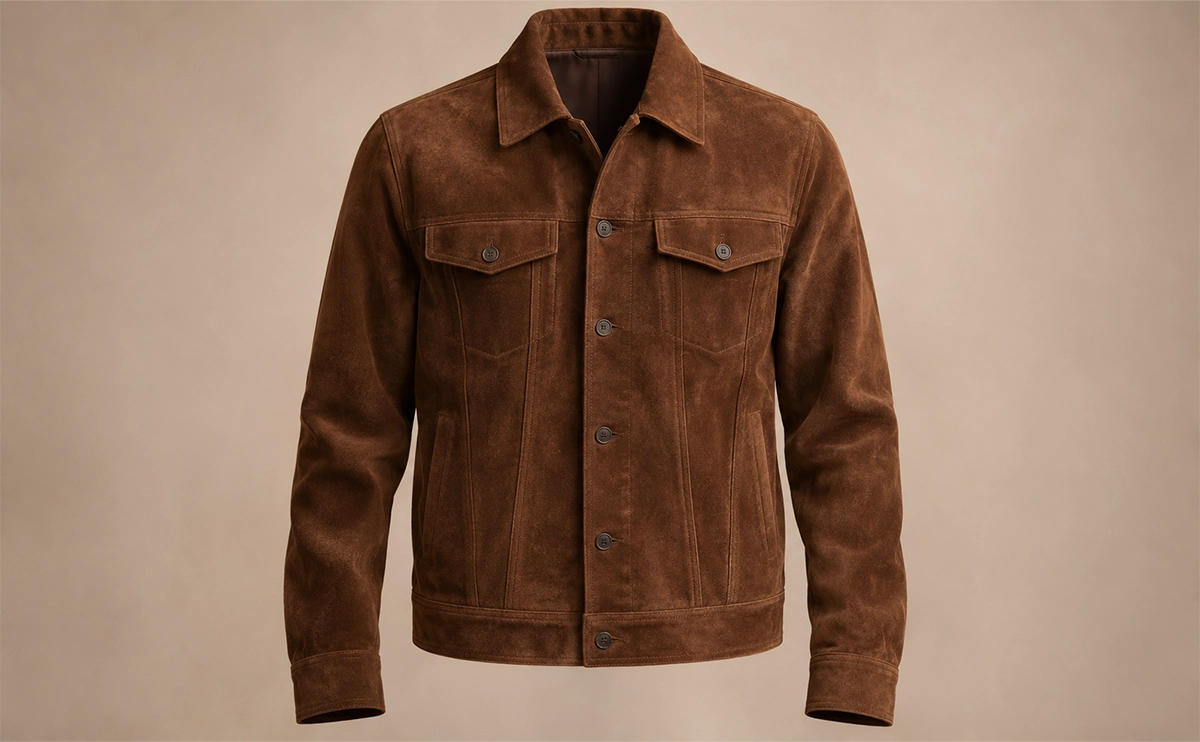
A suede jacket is a leather jacket made from a soft, napped leather surface rather than the smooth grain side most people associate with traditional leather jackets. Suede is known for its velvety texture, matte color depth and relaxed-but-refined look, and it works across bomber, trucker, cafe racer, biker, blazer and overshirt styles.
What is a suede jacket? A suede jacket is a leather jacket made from the soft, napped surface of animal hide, usually created from the inner or split side of the leather. Suede jackets are known for their matte, velvety texture and appear in bomber, trucker, cafe racer, blazer, aviator and overshirt styles.
This guide covers what suede is, how it is made, how it compares with smooth leather, nubuck and roughout, which hides are used, the main jacket styles, colors, fit, weather behavior, care, styling and how to choose. You can browse our full range at Suede Jackets as you read.
What Is Suede?
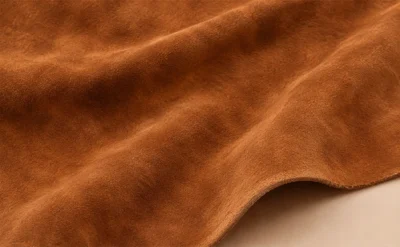
Suede is leather with a soft, raised nap. The nap is a surface of short, fine fibers, and it is usually created from the inner (flesh) side of a hide or from split leather, the layer left after a thick hide is separated into sections.
That surface gives suede its recognizable character:
- Soft touch: a velvety, brushed feel.
- Short fibers: the nap lies in a direction, so brushing it one way can look slightly different from brushing it the other. This is called the directional nap.
- Matte look: suede absorbs light rather than reflecting it.
- Color depth: dyes sit in the fibers, so colors look rich and slightly shaded.
Suede is not simply “soft leather.” Plenty of smooth leather is soft. What defines suede is the napped surface and how it is produced. Quality also varies: hide, split depth, tanning and finishing all affect how a suede jacket looks and wears.
Is Suede Real Leather?
Yes. Genuine suede is real leather, made from animal hide, most commonly cow, lamb or sheep, and goat.
Faux suede is different. It is a synthetic textile (often polyester-based, sometimes sold as microsuede) designed to imitate the look and feel of suede. It is not leather, whatever the label’s wording suggests.
How Is Suede Made?
Suede is made by tanning a hide, exposing the inner or split surface, and then buffing or abrading that surface to raise a nap.
In simple terms:
- The hide is cleaned and tanned so it becomes stable, durable leather.
- The inner (flesh) side or a split layer is selected as the outward-facing surface.
- That surface is buffed or abraded to raise short fibers.
- The leather is dyed and finished, which shapes its softness, color and feel.
Not all suede is made exactly the same way. Tanning methods, split depth, buffing intensity and finishing vary between tanneries, which is why two suede jackets can feel noticeably different.
Suede vs Smooth Leather
| Feature | Suede | Smooth Leather |
| Surface | Soft, napped | Smooth grain/finished surface |
| Appearance | Matte, textured | Cleaner, polished |
| Feel | Soft, velvety | Firm to supple |
| Water sensitivity | Generally higher | Often more resistant depending on finish |
| Care | More specialized | Usually simpler |
| Aging | Nap changes, color variation | Creasing and patina |
| Styling | Soft, relaxed, refined | Rugged, sleek, classic |
Neither is “better.” Smooth leather tends to suit buyers who want a sleek or rugged look and easier weather handling, while suede suits those who prefer a softer texture and warmer visual character.
Suede vs Nubuck
Suede and nubuck are related but not interchangeable.
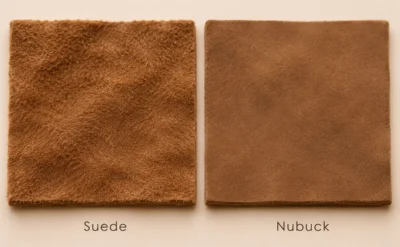
- Suede is usually made from the flesh side or a split layer. It tends to have a softer, longer, more velvety nap.
- Nubuck is usually made from the grain (outer) side, which is lightly sanded. It tends to have a finer, shorter nap and is often denser and more durable.
Because the starting surface differs, nubuck usually looks more uniform and feels firmer, while suede feels plusher. Retail labels are sometimes loose, so check the product description.
Suede vs Roughout Leather
Roughout leather typically has the flesh side facing outward while keeping the full structure of the hide, so it is often thicker and sturdier, with a coarser surface. Suede is more often made from split leather that is buffed more extensively for a finer, softer nap.
Manufacturing details vary, and some terms overlap in the trade, so treat this as a general distinction rather than a strict rule.
What Hides Are Used for Suede Jackets?
These are tendencies, not guarantees. Thickness, tanning and finishing matter as much as the animal.
Cowhide suede is usually more substantial, durable and structured. It suits truckers, bikers and heavier jackets.
Lamb suede is usually softer, lighter and more refined, and it drapes well. It is common in blazers, cafe racers and sleeker bombers.
Goatskin suede is usually flexible and durable with a slightly textured character, and it suits everyday jackets that need to flex.
Sheepskin suede can be soft and warm, and it is associated with shearling construction, where the suede faces out and the wool lining sits inside.
Major Types of Suede Jackets
Suede Bomber Jacket
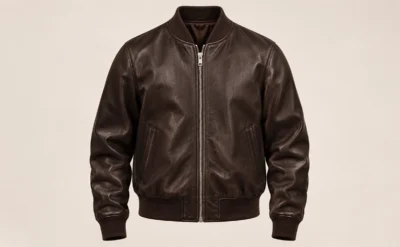
A suede bomber has a relaxed torso, ribbed cuffs and hem, and a zip front. It is casual, easy to wear and versatile, and it works well in brown, tan and black. Fit is typically regular to relaxed. Browse Suede Bomber Jackets
Suede Trucker Jacket
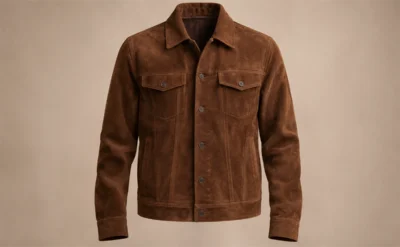
The trucker is defined by a pointed collar, chest pockets and a structured casual silhouette, with strong heritage styling inherited from workwear. Fit is usually a structured regular. It pairs naturally with denim. Explore Suede Trucker Jackets
Suede Cafe Racer Jacket
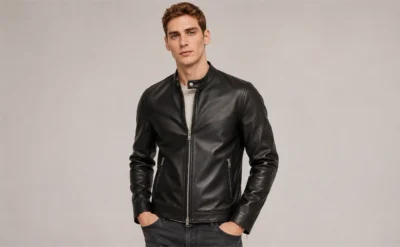
A cafe racer has a band collar, a straight zipper and minimal hardware, usually with a slimmer silhouette. It reads clean and minimal, a good fit for simple, modern wardrobes. See Suede Cafe Racer Jackets.
Suede Biker Jacket
Moto-inspired, with an asymmetric or straight zip and more hardware than a cafe racer (lapels, belts, zipped pockets). In suede it keeps the edgy structure but feels softer than a smooth leather biker.
Suede Aviator Jacket
Aviation-inspired, often with a shearling collar or full shearling lining, and heavier, winter-oriented construction. Choose it for cold weather rather than light layering.
Suede Blazer
Tailored and refined, with a lighter structure than outerwear. It is a smart-casual option that replaces a wool or cotton blazer with more texture.
Suede Overshirt / Shacket
Shirt-like construction, relaxed fit, often unlined. It is a lightweight layering piece for transitional weather.
Suede Western / Fringe Jacket
Western-inspired styling, sometimes with decorative fringe, yoke detailing and a vintage character. It is a strong statement category, but it is only one corner of suede. Most suede jackets are not western-inspired.
Best Suede Jacket Colors
Color shapes the mood of a suede jacket more than most materials, because suede absorbs light and shows dye depth. Common choices are brown, dark brown, tan, camel, cognac, black, olive and burgundy. Browns and tans lean warm and heritage, black leans modern, olive and burgundy are more distinctive, and camel and cognac sit between classic and fashion-forward.
Brown Suede Jackets
Warm, versatile and heritage in feel. Brown works especially well with denim and earth tones (olive, cream, rust, navy). Explore Brown Suede Jackets.
Tan Suede Jackets
Lighter and softer in appearance, tan suits spring and fall styling and pairs easily with beige, cream and denim. It can show marks more readily, so care matters. Browse Tan Suede Jackets.
Black Suede Jackets
More modern and minimal, and easier to wear with monochrome wardrobes. Black suede is also the least overtly western-looking of the three.
Brown vs Tan Suede Jacket
Brown suede is richer, darker and generally more rugged. Tan suede is lighter, softer and more casual. Your wardrobe and climate usually decide it.
How Should a Suede Jacket Fit?
Fit depends on the style, and a suede jacket should not automatically be slim. In general:
- Shoulders should look intentional, with the seam at or near your shoulder point.
- Chest should close comfortably, with room for the layers you plan to wear.
- Sleeves should end around the wrist.
- Torso should follow the silhouette the style intends.
- Avoid severe pulling across the back or chest, and excess fabric unless the jacket is intentionally oversized.
By style: cafe racer is closer, bomber is more relaxed, trucker is a structured regular fit, blazer is tailored and overshirt is relaxed.
Are Suede Jackets Durable?
Yes, suede can be durable, but it generally needs more careful handling than a heavily finished smooth leather jacket. It is not inherently fragile.
Durability depends on the hide, thickness, construction, finish, care and exposure. A well-made cowhide or goatskin suede jacket can last for years with sensible care, while thin or lightly constructed suede will show wear sooner, especially at cuffs, collars and pocket edges.
Are Suede Jackets Warm?
It depends. Warmth comes from thickness, lining, shearling, construction and fit rather than from suede itself.
- An unlined suede overshirt is light.
- A lined suede bomber is moderate.
- A suede shearling aviator is very warm.
Are Suede Jackets Good for Winter?
Some are. The best winter suede jackets are lined bombers, shearling jackets and aviators. Lightweight suede jackets (unlined overshirts, blazers, thin cafe racers) suit fall, spring and mild winters better. In wet or snowy conditions, remember that suede is more water-sensitive than many smooth leathers.
Can Suede Jackets Get Wet?
Suede can tolerate occasional light moisture depending on its finish, but it is more sensitive to water than many smooth leathers. Suede is not waterproof.
Water can affect the nap (making it flatten or clump), the color (darkening or uneven patches), spotting (water marks as it dries) and the feel (a stiffer hand once dry). Gentle, natural drying and brushing can often restore much of the surface.
How to Care for a Suede Jacket
The core routine is gentle and simple:
- Brush gently with a suede brush to lift the nap and remove dust.
- Use suede-specific tools (brush, eraser, cleaner). Standard leather conditioner is not appropriate unless the product is specifically made for suede.
- Avoid saturating the surface with liquid.
- Test any product on a hidden area first.
- Dry naturally if the jacket gets wet, away from direct heat.
- Store dry (see below).
- Use a suede protector only if it is suitable for your jacket’s color and finish.
For stains or heavy soiling, consult a professional leather and suede cleaner.
How to Store a Suede Jacket
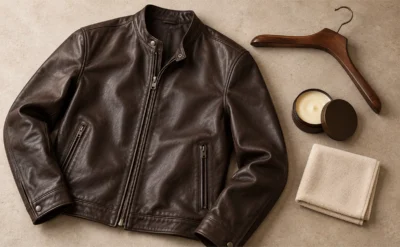
- Use a wide, supportive hanger so the shoulders keep their shape.
- Choose a cool, dry place with good airflow.
- Prefer breathable garment bags over plastic for long-term storage.
- Avoid crushing the jacket, which can flatten the nap.
- Keep it away from prolonged direct sunlight, which can fade color.
How to Style a Suede Jacket
- Casual: suede bomber + T-shirt + jeans + sneakers.
- Heritage: brown suede trucker + denim + boots.
- Smart casual: suede blazer + knitwear + trousers.
- Minimal: black suede cafe racer + monochrome basics.
- Transitional: tan suede overshirt + white tee + chinos.
More outfit ideas
How Men Can Style Suede Jackets
Suede pairs easily with denim, chinos, knitwear, boots and sneakers. A brown trucker over a plain tee and dark jeans is a dependable base. Browse Men’s Suede Jackets.
How Women Can Style Suede Jackets
Suede works with jeans, dresses, skirts, tailored trousers, boots and sneakers. A tan or camel suede jacket over a slip dress, or a black cafe racer with straight-leg trousers, are two directions among many. These are suggestions, not rules. Browse Women’s Suede Jackets.
Suede Jacket vs Leather Jacket
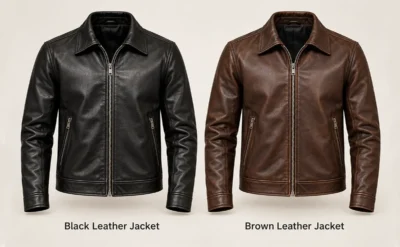
Suede is softer, matte, refined and more care-intensive. Smooth leather is more polished, often more weather-resistant, and can read rugged or sleek depending on its finish. Many wardrobes benefit from one of each.
Real Suede vs Faux Suede
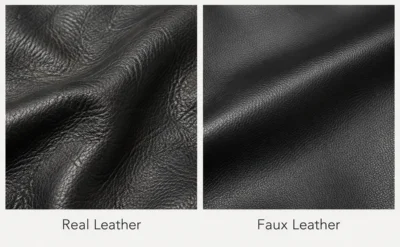
Real suede is animal hide with a natural nap and more organic variation from piece to piece. Faux suede is synthetic, more uniform, usually easier to care for and typically lower in cost. Neither is automatically the right choice: real suede suits buyers who want leather’s character, while faux suede suits those who prioritize price or easy upkeep.
How to Choose the Right Suede Jacket
- Choose the style. Bomber, trucker, cafe racer, blazer, overshirt, aviator.
- Choose the hide or material. Cowhide, lamb, goat, sheepskin, or faux.
- Choose the color. Brown, tan, black, olive and others, based on what you already wear.
- Choose the fit. Slim, regular, relaxed or oversized, based on the style and your layering.
- Check lining and warmth. Match the jacket to your climate.
- Check care requirements. Suede needs more attention than many smooth leathers, so make sure you are comfortable with that.
Best Suede Jacket by Use Case
| Need | Consider |
| Everyday casual | Suede bomber |
| Heritage style | Suede trucker |
| Minimal look | Suede cafe racer |
| Smart casual | Suede blazer |
| Lightweight layering | Suede overshirt |
| Winter warmth | Suede shearling/aviator |
| Vintage/western look | Fringe/western jacket |
Are Suede Jackets Worth It?
Yes, if you value soft texture, distinctive color depth, refined casual styling and heritage character. Suede rewards buyers who enjoy a jacket with some personality.
The trade-offs are real: it needs more care, it is more sensitive to water, and it can be more sensitive to stains than finished smooth leather. If you live somewhere very wet or want a no-maintenance jacket, smooth leather or a protected finish may suit you better.
Final Verdict
Suede jackets offer a softer, more textured alternative to smooth leather and work across styles from bombers and truckers to cafe racers, blazers and overshirts. The best suede jacket depends on material, fit, color, climate and how much maintenance you are comfortable with.
Explore → Suede Jackets , Shop Men’s Styles → Men’s Suede Jackets , Shop Women’s Styles → Women’s Suede Jackets
FAQ’s
Suede is usually made from cow, lamb, sheep or goat hide, using the inner (flesh) side or a split layer that is buffed to raise a soft nap.
No. Nubuck is usually made from the grain side and has a finer, shorter nap, while suede usually comes from the flesh or split side and feels softer and more velvety.
It can be. Durability depends on the hide, thickness, construction, finish and care. Suede generally needs more careful handling than heavily finished smooth leather but is not inherently fragile.
No. Some are treated to resist moisture, but suede should not be considered waterproof.
Lined bombers, shearling jackets and aviators can be. Lightweight suede suits fall, spring and mild winters, and wet weather calls for extra caution.
Suede can relax slightly with wear, particularly at the elbows and shoulders, but it should not be expected to stretch significantly. Choose a size that fits comfortably from the start.
It depends on priorities. Real suede offers leather’s natural character and longevity, while faux suede is usually cheaper and easier to maintain.
Brush gently with a suede brush, use suede-specific cleaners and erasers, test products on a hidden area and avoid soaking. For heavy stains, use a professional leather and suede cleaner.